10 Features That Made The McLaren 570S A Road-Ready Supercar

Not every supercar demands racetracks or weekend storage. The McLaren 570S showed that performance and practicality aren’t mutually exclusive. Launched with a vision beyond lap times, it bridged the gap between dream machines and daily drivers. So, let’s take a look at ten standout features that helped the 570S earn its reputation as a road-ready performance icon.
Built For The Road, Not Just The Track

The McLaren 570S launched in 2015 as the first entry in the Sports Series lineup. It wasn’t built just for circuits like the P1 or 650S. It featured adaptive dampers that smoothed out city streets and a front-lift system for navigating speed bumps.
Supercar Power Without The Supercar Price

With an MSRP of about $184,900, the 570S undercuts the Ferrari 488 and Lamborghini Huracan. Still, it produces 562 horsepower and sprints from zero to 60 mph in 3.2 seconds. Thanks to its low curb weight, its power-to-weight ratio outperforms many rivals that cost significantly more.
Lightweight Engineering You Could Afford

At its core is the MonoCell II, a carbon-fiber tub that weighs only 176 pounds. This same structural technology appeared in McLaren’s million-dollar hypercars. The 570S’s total curb weight stayed around 3,200 pounds, lighter than an Audi R8 or Porsche 911 Turbo.
Tech That Tackled Real Roads

Even the front trunk holds 5.3 cubic feet, enough for weekend luggage. Features like dual-zone climate control and parking sensors make it liveable. Instead of McLaren’s Proactive Chassis Control, the 570S uses a traditional mechanical suspension with adaptive dampers that react quickly to changing road conditions.
Feels Like A Race Car From The Driver’s Seat
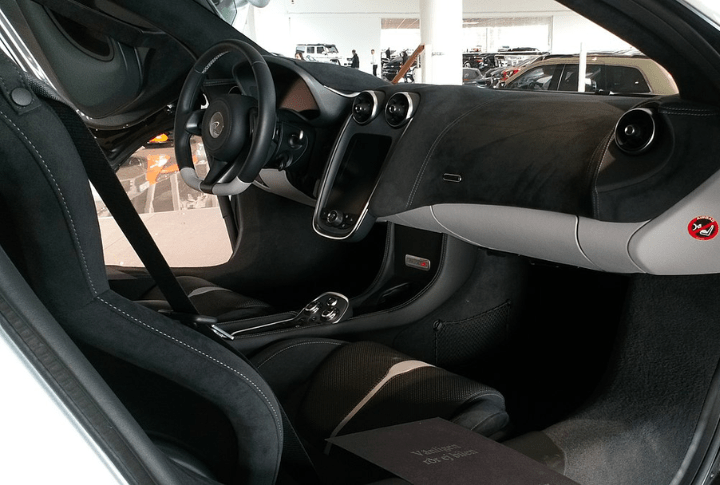
Inside, the 570S positions drivers low and forward in fixed-back bucket seats. The steering column adjusted for both reach and rake, a rarity in mid-engine exotics. Thin A-pillars widened track visibility by blending race-bred ergonomics with surprising usability for a road-focused supercar.
Precision Handling Without Electronic Nannies

The 570S utilizes hydraulic power steering, which provides a more direct connection to the road than the electric setups found in many modern rivals. McLaren lets drivers fully disable ESC. The rear-wheel-drive, mid-engine layout provides a 42/58 weight balance, which helps the car stay planted in quick directional transitions.
You Still Get The McLaren V8 Roar

Its 3.8-liter M838T V8 shares architecture with McLaren’s GT3 racers. Twin-scroll turbos reduce lag and maximize throttle response. Through variable valve timing and controlled boost pressure, engineers give the exhaust a distinctive crackle that sounds raw, not artificial—a rare trait in today’s turbocharged era.
Striking, Not Screaming

Every curve on the 570S comes from computational fluid dynamics testing, a technique McLaren adapted from its Formula 1 program. The result is a drag coefficient of 0.32, making it impressively aerodynamic. Yet it never feels flashy for its own sake, as it simply looks exotic by design.
The Car That Changed McLaren’s Game Plan

The 570S launches the Sports Series—McLaren’s first attempt to expand beyond high-end hypercars. It outsells the pricier 650S by showing that buyers want accessible performance. Its success led to the creation of the McLaren GT and the hybrid Artura, which now carry forward that broader vision.
Its Depreciation Curve Is Friendly

In 2016, the McLaren 570S launched with a starting price of $187,400. By 2022, resale prices generally range between $119,999 and $219,000, based on mileage and condition. In 2023, values begin to dip further as factory warranties expire and the newer Artura gets more attention.