15 Fastest WWII Planes; Some Even Outpaced the Legendary P-51 Mustang
When the Axis Powers dominated the skies during WWII, the Allies responded with nearly 300,000 aircraft. Although the P-51 Mustang is among the most celebrated, especially for its speed, other planes outpaced Axis fighters. Here’s a list of WWII aircraft that gave the Allies air supremacy; some were even faster than the P-51.
Boeing B-29 Superfortress—357 mph
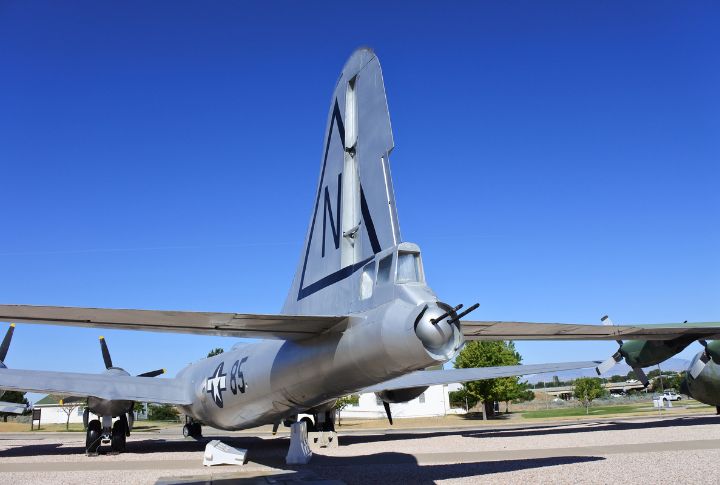
Compared to the P-51, the B-29 Superfortress cruised at 357 mph. Under General Curtis LeMay, crews conducted low-altitude incendiary bombing missions from bases in the Mariana Islands to distant targets in Japan. This WWII plane could handle the heavy lifting and tech innovations—just not the NASCAR-style sprints of the Mustang!
Curtiss P-40 Warhawk—362 mph
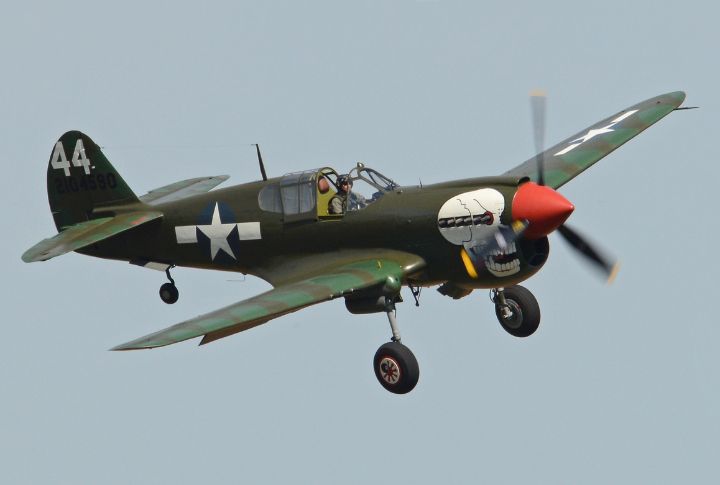
The P-40 was one of the few fighters available in large numbers when the US entered WWII. It saw action in many theaters, including the Pacific, North Africa, and the Soviet Union. This plane flew in the most challenging spots and harshest conditions because it was rugged and available, and its modular construction made it easier to repair.
North American A-36 Mustang—365 mph
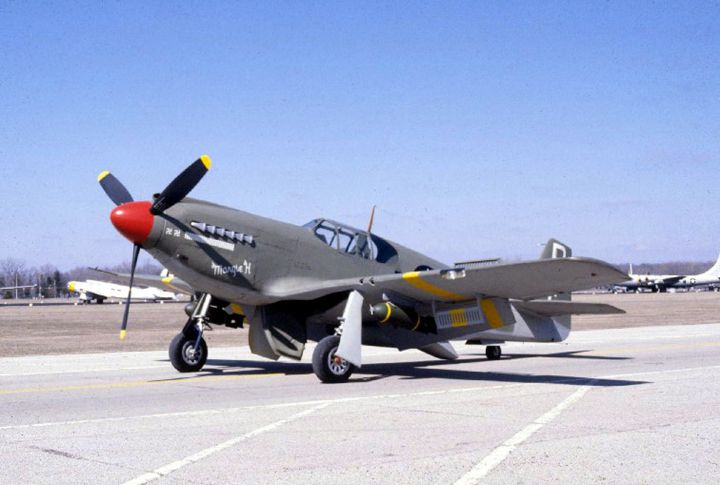
This Mustang air-to-air combat fighter might have had a top speed of 365 mph, but it wasn’t aiming to break records. The history books remember its ground support roles, particularly in the Mediterranean and China-Burma-India theatres. Though fast, the A-36 was more about precision and dive-bombing than speed.
Northrop P-61 / F-61 Black Widow—About 370 mph
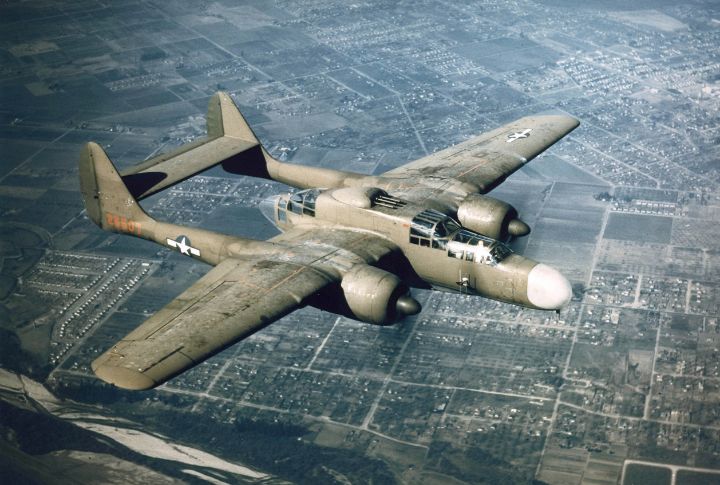
The Black Widow was fast enough for the war front as a true night owl with advanced radar capabilities. Earlier models reached 370 mph, but subsequent variants reached 430 mph. Although the night fighter Black Widow could catch a glimpse of enemy aircraft, it would struggle to keep up in a high-speed chase with the P-51.
Grumman F6F Hellcat—376 mph
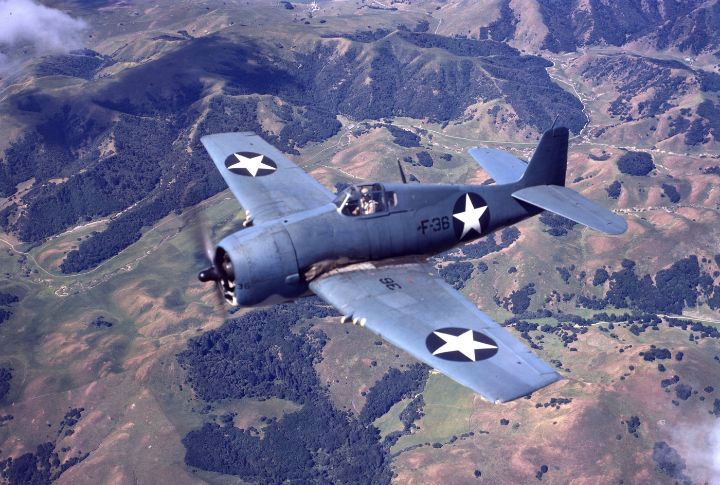
When operating from aircraft carriers, the F6F Hellcat delivered firepower where it mattered most. This rugged carrier-based fighter was the unsung hero of the Pacific Theater, thanks to its close-air support and naval operations. Since it topped out at 376 mph, the Hellcat wasn’t the fastest plane on the block, but it moved quickly enough to protect Allied bombers.
Bell P-39 Airacobra—376 mph
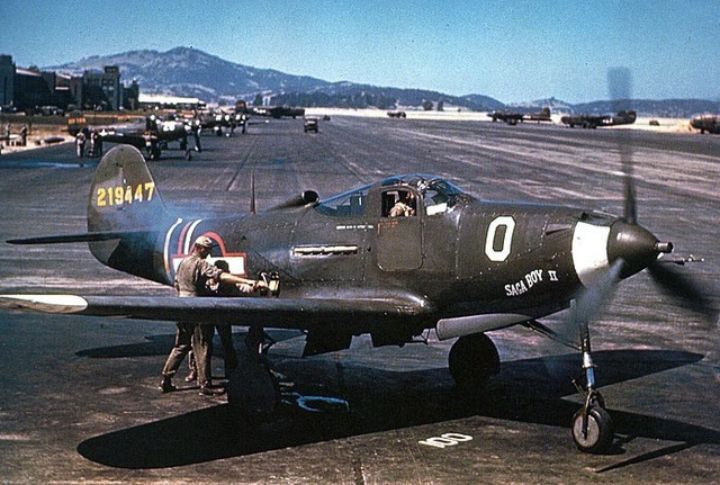
The Bell P-39 Airacobra, with a max speed of 376 mph, had a commendable speed for its intended operational environment. Soviet fighters loved its performance in ground attack, low-altitude, and close support. It might not have soared like the P-51, but the P-39’s 37-mm cannon rained fire and brimstone on the Axis Powers.
Bell P-63 Kingcobra—410 mph
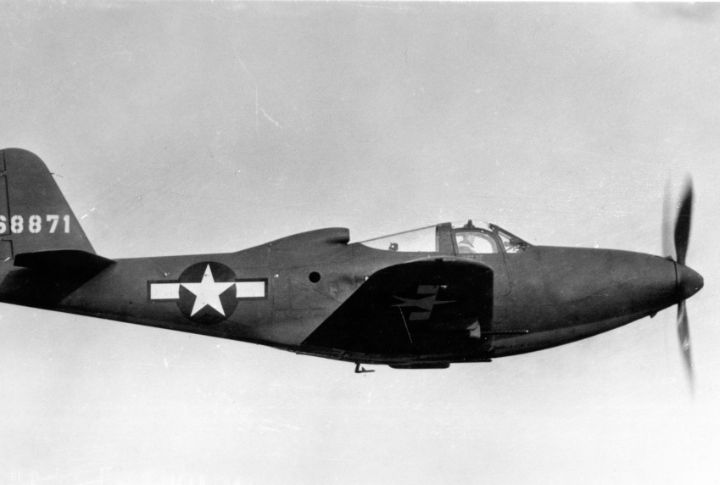
Here’s another WWII fighter aircraft that the Soviet Air Force loved flying. The Kingcobra, with its groove-busting tanks and tearing up ground targets, earned a reputation as a “tank buster” due to its powerful armament. Let’s just say their pilots jumped at the opportunity to fly up to 421 mph while shooting from a 37-mm cannon.
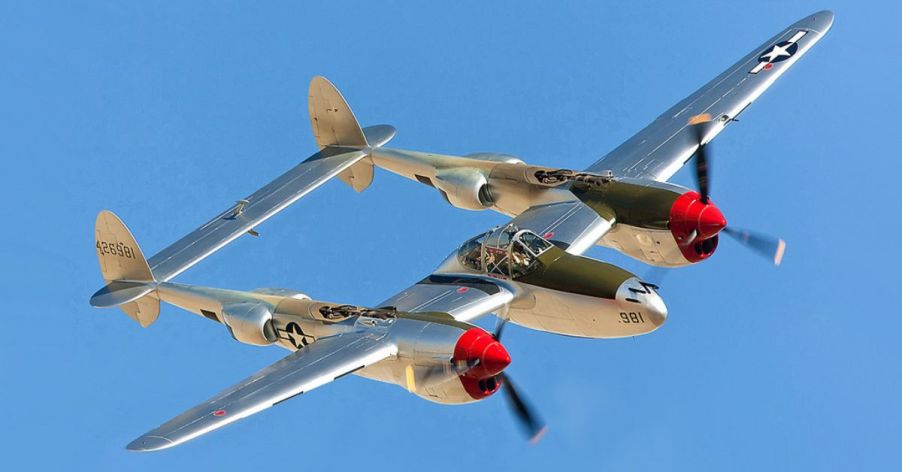
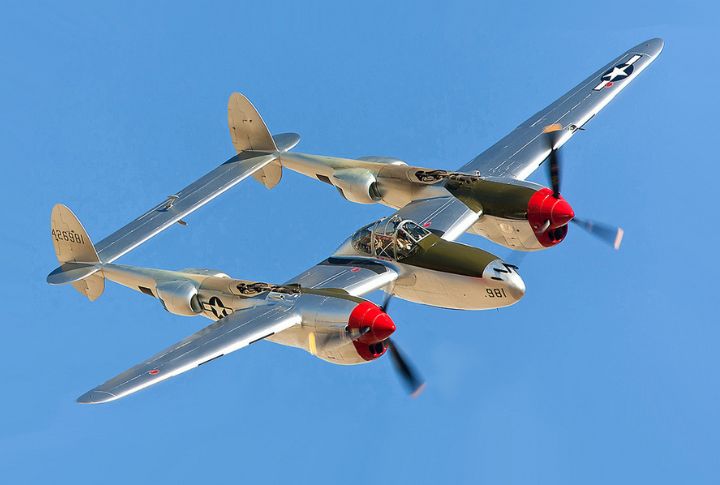
Lockheed P-38 Lightning — 414 mph
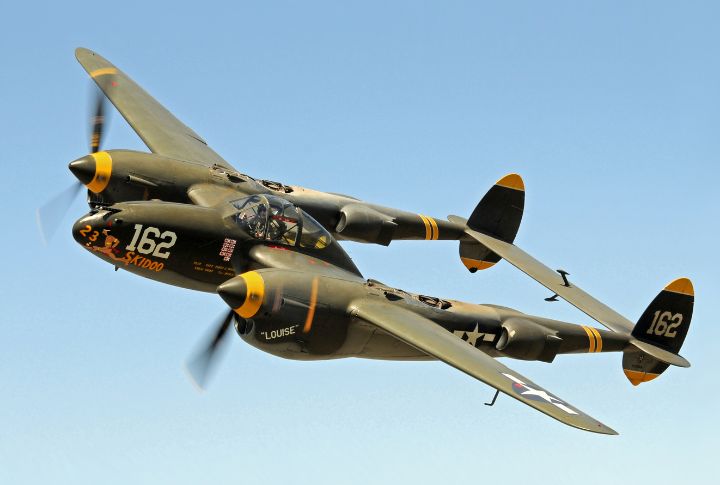
The Lockheed P-38 Lightning, with its distinctive twin-boom design and turbocharged Allison engines, was a speed demon at 414 mph. The P-38 was also a versatile fighter, bomber, and night stalker because it could climb 3,300 feet in a minute and escort bombers 1,150 miles deep into enemy territory—no wonder this intelligence-surveillance-reconnaissance dominated the Pacific Theater.
Brewster F3A (F4U-1) Corsair—407 mph
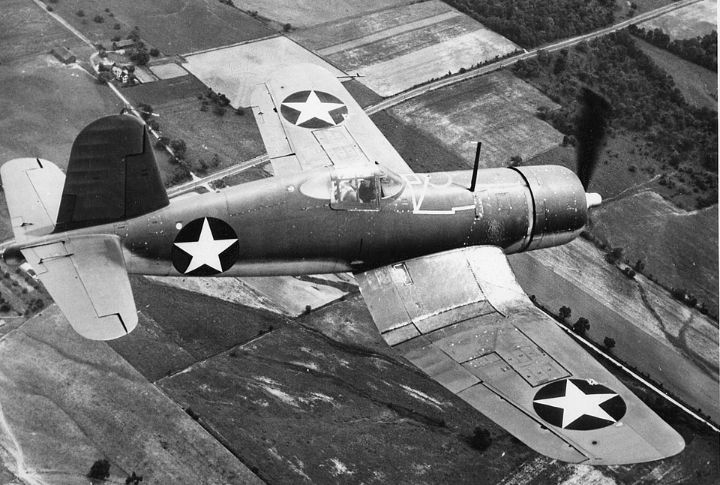
Brewster’s F3A Corsair was one of the fastest fighters of its time, at 407 mph. Its pilots were armed with six .50 caliber machine guns. This warbird was built for carrier ops with a rugged airframe and tailhook. The British Fleet Air Arm even got 430 Corsairs because they warmed up to the planes much faster than the US.
De Havilland Mosquito—415 mph
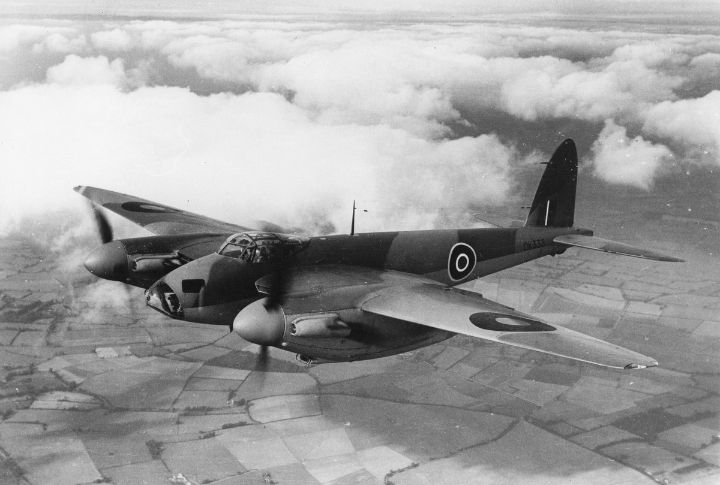
The RAF Pathfinder Force (Allied) used the “Wooden Wonder” to intercept German bombers and offensively attack targets in occupied Europe. These WWII planes flew from June 1944 to March 1945, dodging flak at treetop level, marking targets for night raids, and even hunting down German V-1 bombs. Mosquito night fighters proved that wood could beat steel.
Republic P-47 Thunderbolt—426 mph
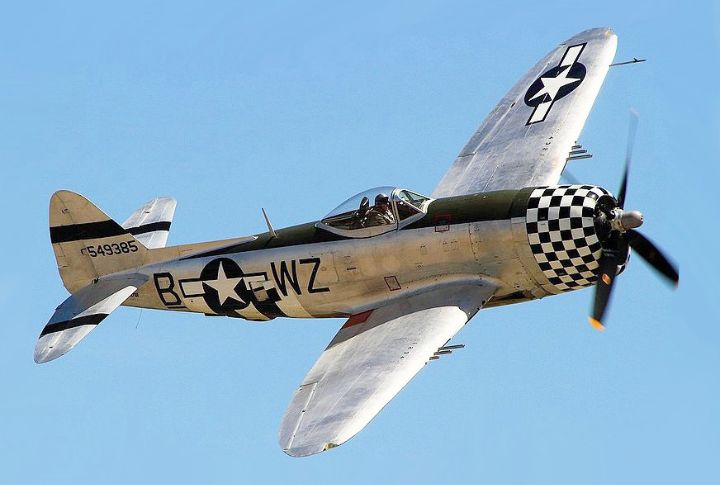
During the Normandy Invasion, the P-47 ran riot on German armored vehicles, bridges, and enemy airfields before the D-Day landings on June 6. Pilots affectionately nicknamed this hefty single-engine fighter the “Jug.” When Republic installed the latest versions of Pratt & Whitney’s R-2800 engine on three P-47D models, they recorded 475 mph, the highest by any American combat aircraft in WWII.
Northrop F-15 Reporter—441 mph
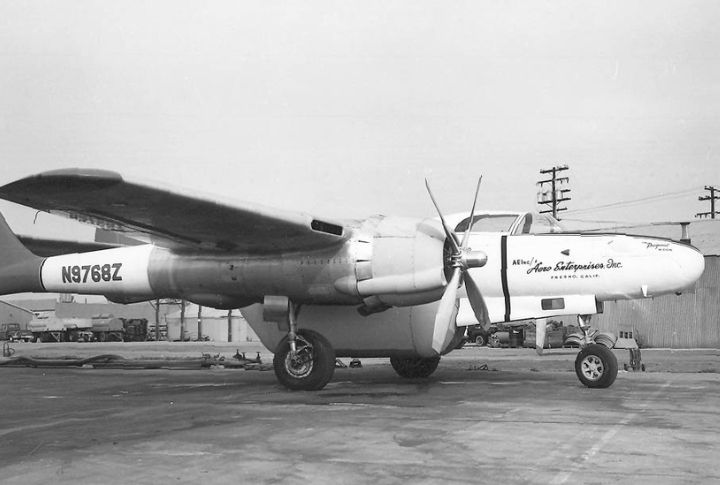
Whether the Allied needed high-speed reconnaissance or low-level surveillance, the 441 mph Northrop plane was there to save the day. This plane’s nose was full of cameras to gather detailed intelligence and high-quality images of enemy territories. The F-15 could also go on long-range missions, with an impressive operational range of about 1,901 miles.
Vought F4U Corsair—446 mph
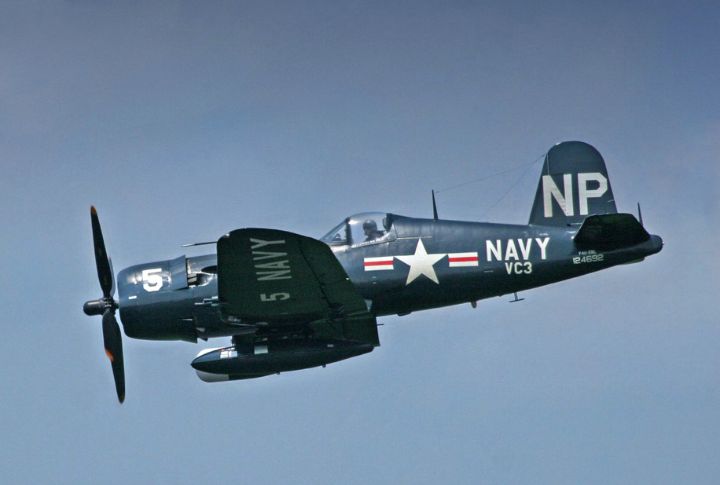
Regarding speed, the Vought F4U Corsair outpaced the P-51 Mustang in WWII with its massive 2,100 hp Pratt & Whitney R-2800-18W. Since its engine could hit 448 mph, it was a formidable dogfighter in the Pacific theater. The Corsair climbed faster and dodged enemy fire, especially during carrier ops. It was a fine blend of speed and style.
Supermarine Spitfire—448mph
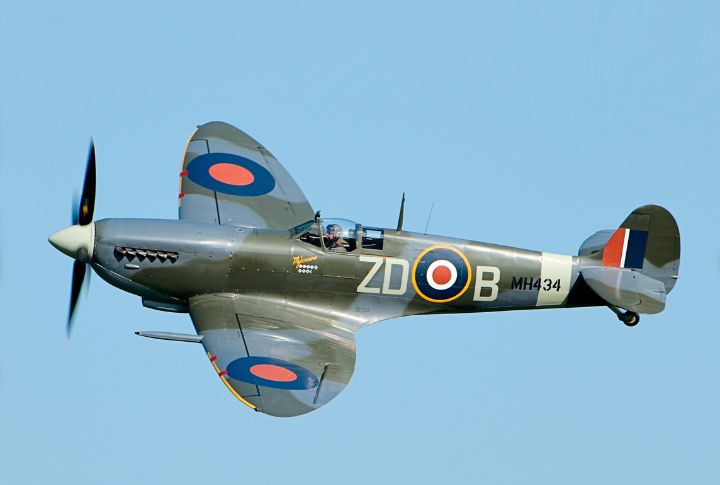
When the Brits wanted a plane with a top speed of 448 mph, they built the MKXIV Spitfire. The aircraft had a Rolls-Royce Griffon engine, a 3,650 ft/min climb rate, and a stressed metal skin for easier modification. Spitfires flew from WWII through the ’60s because they had greater range, better resilience, and superior visibility.
Lockheed P-80/F-80 Shooting Star—577 mph
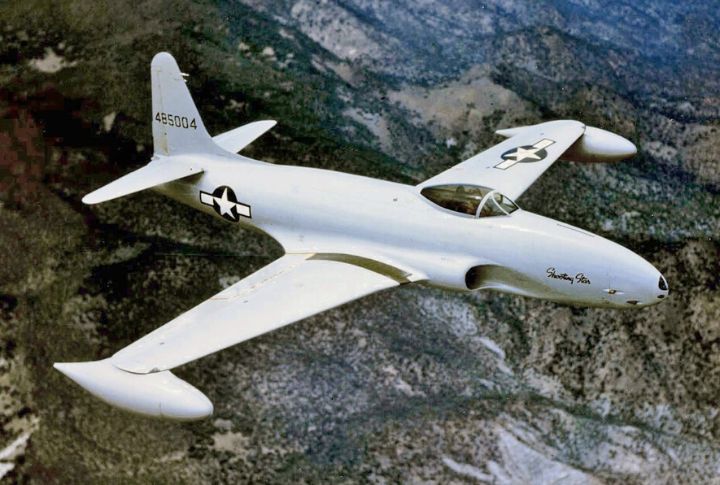
In 1945, the Lockheed P-80 set the stage for jet-powered aircraft with a single fuselage-mounted Allison J33 turbojet engine producing 594 mph. On June 19, 1947, a modified P-80R set a world speed record at 623.73 mph. Although delayed production prevented P-80s from active combat, a YP-80A with the 94th Fighter Squadron flew two non-combat missions in Italy.