Exploring American History Through Vintage Roadside Stations
Before fast food chains and digital pumps took over the roadside, America’s highways were dotted with miniature architectural marvels. The gas stations were neon-lit landmarks and symbols of pop culture, as well as the promise of progress. Each station held a story of design dreams and cross-country adventures. Let’s roll the windows down and cruise through the stations that once defined our highways and our history.
Teapot Dome Service Station: Zillah, Washington
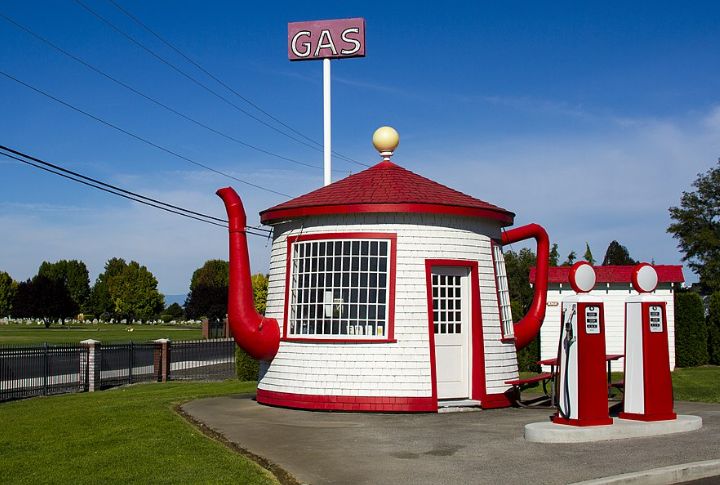
Shaped like a kettle with a spout and handle, this 1922 structure pokes fun at political scandal. Humor and protest met in shingles and sheet metal after the Teapot Dome bribery case. Long after the scandal faded, it remains a cherished and curious monument to public dissent.
Art’s Auto – Pawtucket, Rhode Island
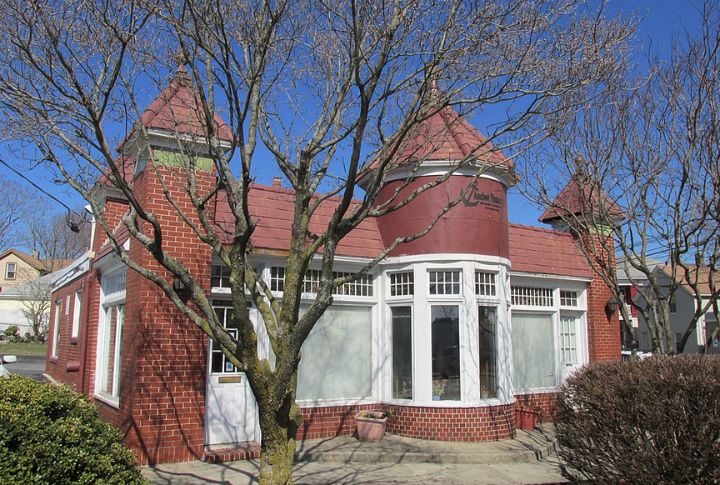
Built in 1927–28, this early brick station features dramatic corner turrets topped with pyramidal roofs and a round central bay capped by a conical roof. Designed to catch motorists’ attention, it served as a novelty station during the early automobile era. Today, it has been repurposed as offices for a local firm while preserving its whimsical architectural charm.
Roy’s Motel and Cafe: Amboy, California
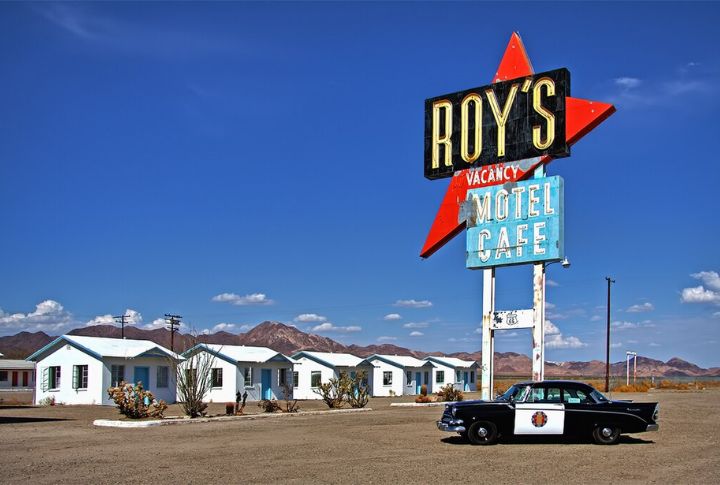
In the barren land of the Mojave Desert, Roy’s is a beacon of mid-century Americana. Since 1938, its angular Googie-style neon sign has lured road-trippers off the heat-blasted Route 66. Against a backdrop of endless skies, Roy’s became a symbol of the golden age of motor travel. Its return to life in recent years adds another layer to its legacy.
Sinclair’s Dinoland: New York World’s Station
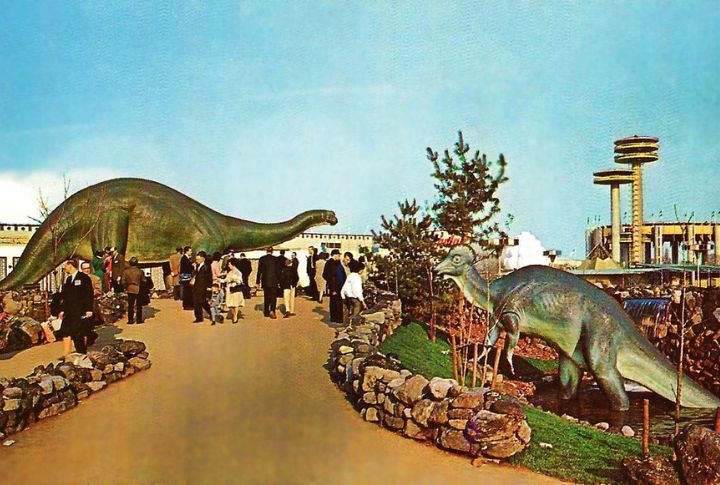
Sinclair Oil turned fuel into fascination when it brought dinosaurs to Queens in 1964. With towering fiberglass sculptures of prehistoric beasts, Dinoland blended awe with branding in a way few marketing stunts have matched. Even today, Sinclair’s green dinosaur remains a roadside icon thanks to this wildly successful exhibit.
Sinclair’s Dino at the World’s Fair: Chicago, Illinois
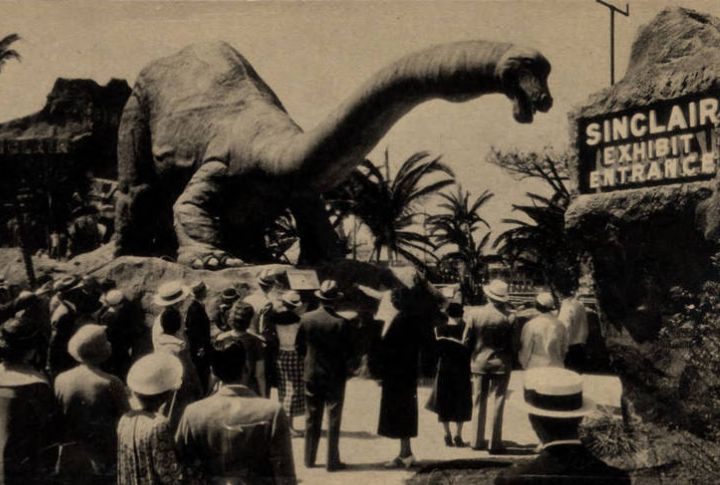
Towering and unapologetically green, the life-size Apatosaurus served as both a marketing marvel and a mobile science lesson. While Depression-era America struggled with hardship, this cheerful colossus was a symbol of advertising with a side of education, and it worked brilliantly.
Jack Rabbit Trading Post: Joseph City, Arizona
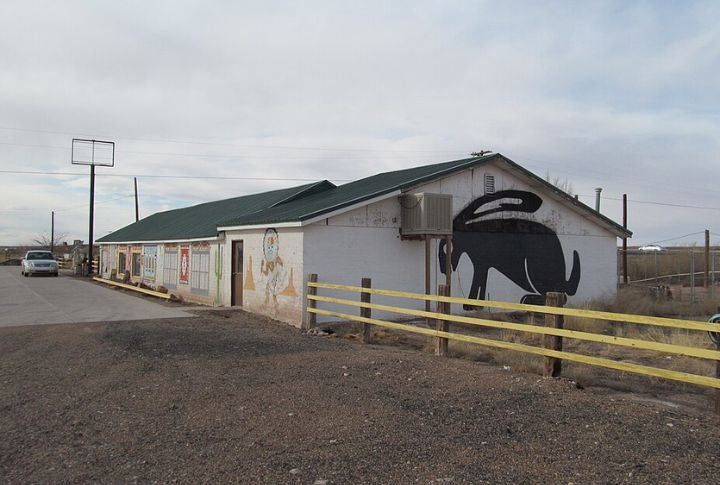
Opened in 1949, this family-owned station and souvenir stop was a marvel. Its leaping rabbit mascot and its desert kitsch charm turned a stretch of Arizona highway into a destination. Generations of road-trippers have stopped for a T-shirt or a photo on the giant jackrabbit out front.
Hat ‘N’ Boots Station: Seattle, Washington
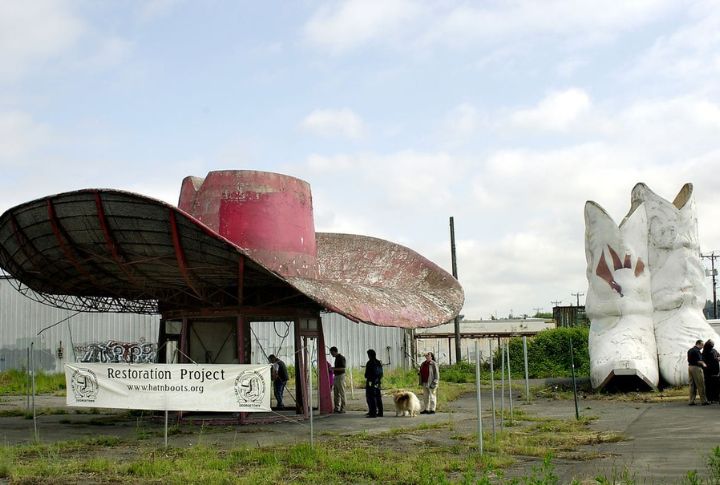
Nothing says roadside Americana like a ten-gallon hat and a pair of cowboy boots the size of a sedan. Built in the 1950s, Seattle’s Hat ‘N’ Boots station turned heads with its oversized Western flair. The cashier worked under a giant Stetson, and restrooms were tucked into red and blue boots. Though it closed decades ago, the city rallied to preserve the playful oddity.
Standard Oil Gasoline Station: Odell, Illinois
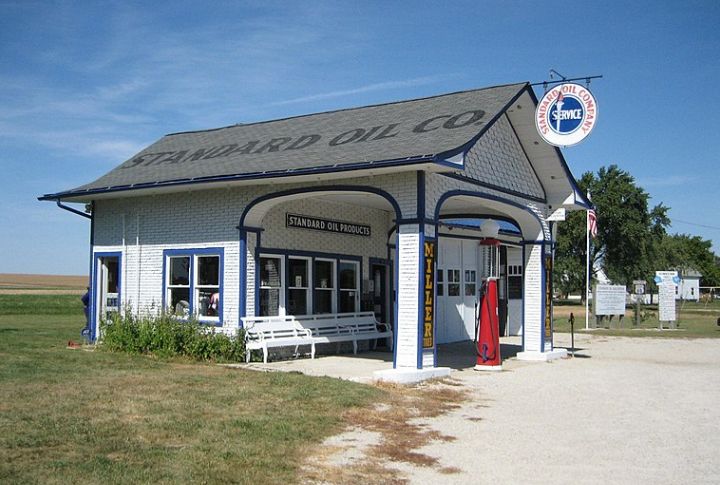
Built in 1932, its no-frills simplicity was exactly what Depression-era travelers needed. Its crisp lines and cozy office told you this was a place where you could trust the price and the people. Today it stands as a museum exhibit, quietly narrating the story of America’s motoring past.
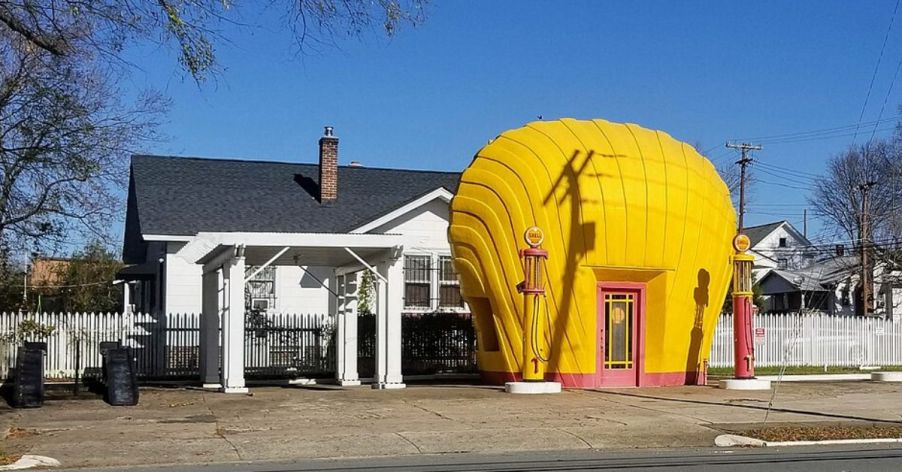
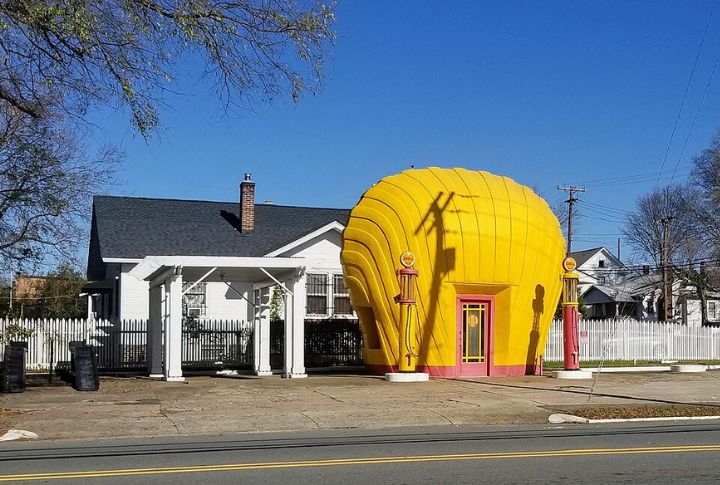
Shell Service Station: Winston-Salem, North Carolina
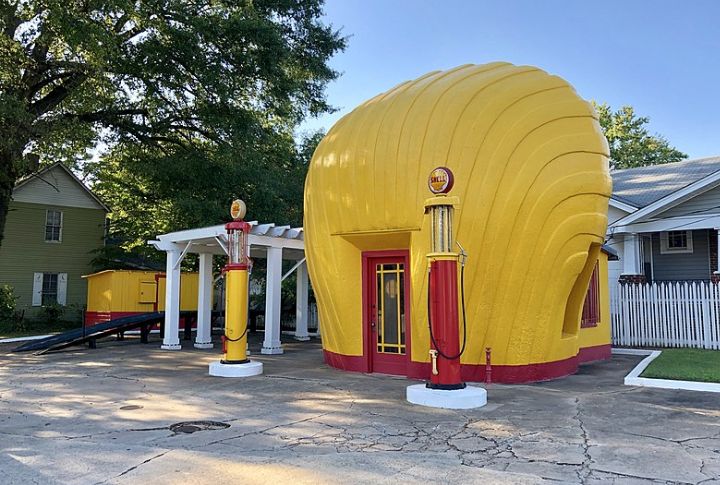
Unlike other neon stations, this one stood out due to its distinctive shape. Designed to resemble an actual scallop shell, this station didn’t need a sign. It is one of eight original structures built to embody the brand. Situated in a Winston-Salem neighborhood, the preserved station captures a time when branding was an integral part of the building itself.
Shady Bend Gas Station, Grocery & Diner – Grand Island, Nebraska
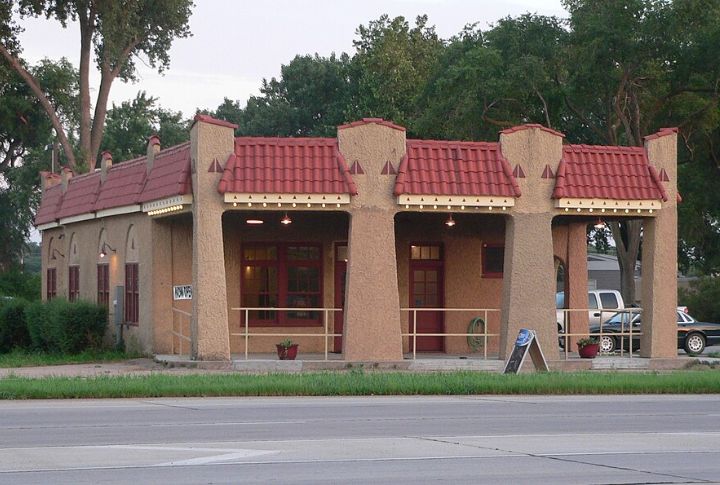
Shady Bend was a 1931 one-stop oasis on the Lincoln Highway. With its stucco walls and classic signage, this station was a crossroads of convenience and comfort. It represented a time when the road trip was a ritual and the stops were woven into the memory of the miles with a place to pick up your pantry staples.
Huning Highlands Station: Albuquerque, New Mexico
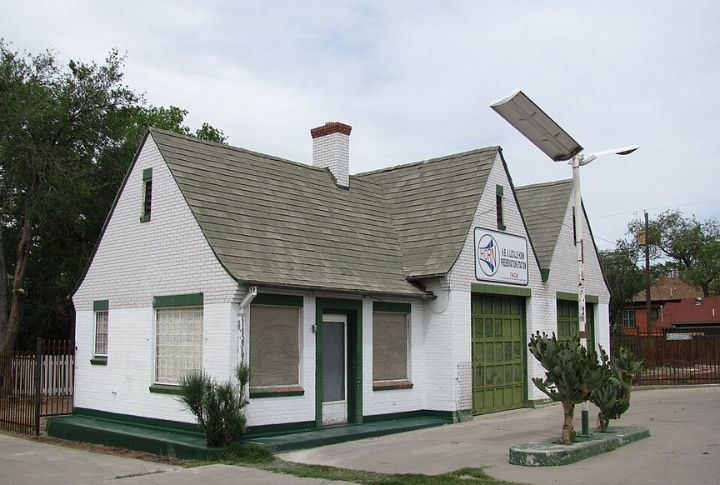
Built in 1937 by the Continental Oil Company, this streamlined structure sits like a Deco time capsule in Albuquerque’s historic Huning Highlands district. It wasn’t just about selling gas—it was about serving a growing city shaped by the automobile. With clean lines and architectural elegance, it exemplified how service stations could blend seamlessly with the beauty of the neighborhoods they served. Today, it stands as a reminder that good design never goes out of style.
Magnolia Company Filling Station – Fayetteville, Arkansas
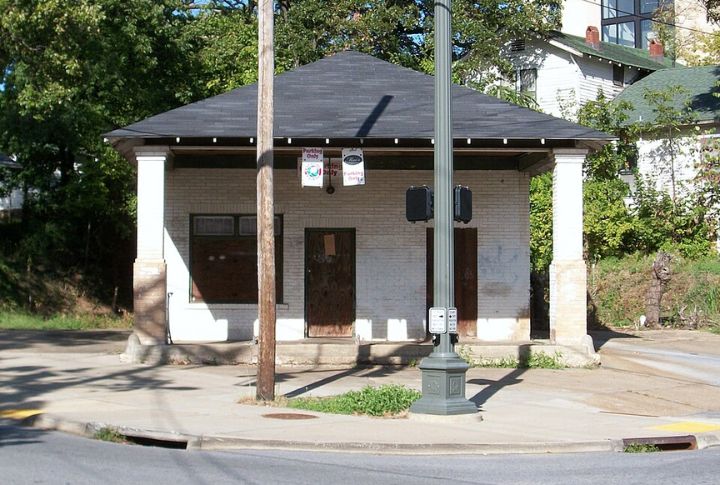
Its compact, white-brick frame and hip roof carried the quiet dignity of early branding, where clean design spoke louder than neon. One of the earliest corporate stations in Arkansas, it remains a humble monument to a time when design and dependability fueled the American road.
Sinclair Dinosaur Station — Various Locations
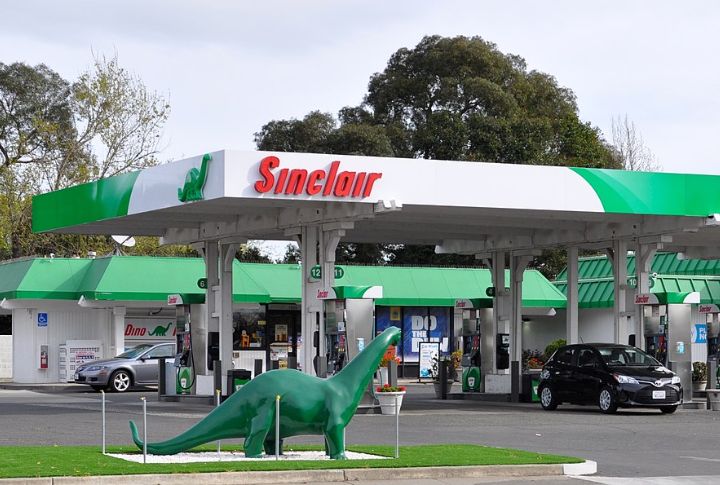
Born in the 1930s as part of Sinclair Oil’s brilliant branding, these giant dinosaur statues turned ordinary gas stations into prehistoric playgrounds. They symbolized fun more than fuel. Kids climbed on them and families took photos of them. In a world before social media, Sinclair’s dinos were viral before the term “viral” was even coined.
Panhandle Oil Company Station: Tulsa, Oklahoma
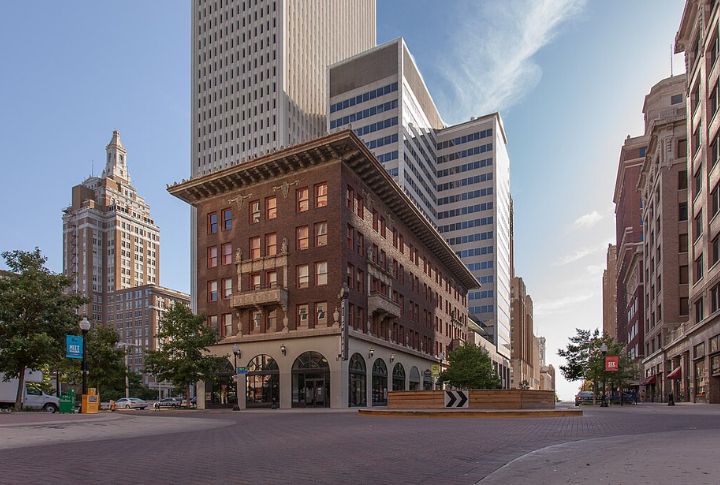
Back when Tulsa was the “Oil Capital of the World,” the Panhandle Oil Company station stood as a sleek, stylish ambassador of the city’s booming energy industry. Blending function with flair, the Art Deco structure served as a proud icon of Oklahoma’s petroleum prowess. The station’s preserved signage and classic design still echo an era of black gold and big dreams.
Union 76 Station, California
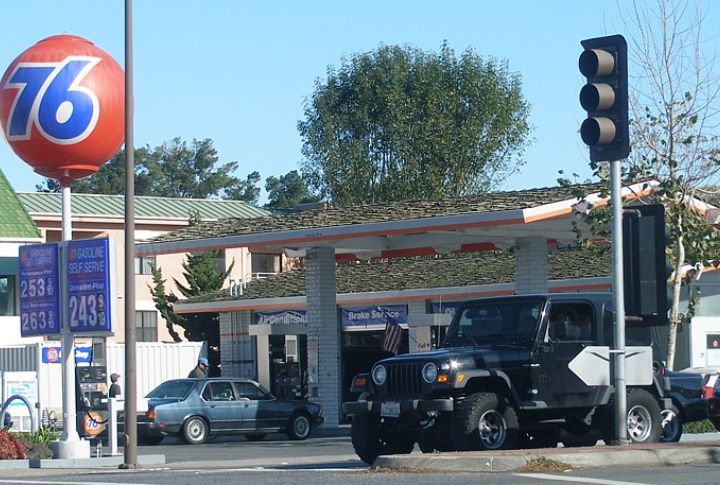
If gas stations could star in movies, this one would’ve won an Oscar. Designed by Gin Wong in 1965, the Union 76 station in Beverly Hills is a Googie masterpiece. Initially meant for LAX, its swooping red canopy appears to be ready to take flight. It’s been featured in architecture tours and car commercials, cementing its place as one of the most glamorous fill-up spots ever built.
Gilmore Gas-A-Teria, California
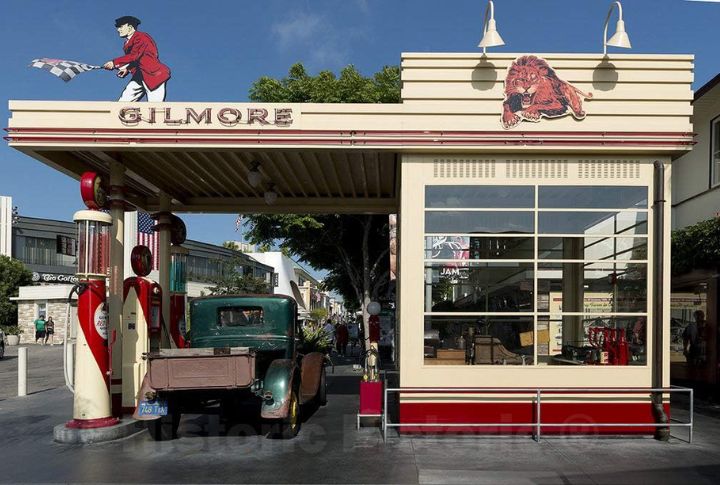
Decades before Costco brought us pay-at-the-pump, Gilmore Oil introduced the “Gas-A-Teria” in 1948. Located on Beverly Boulevard, it was a self-serve revolution wrapped in Streamline Moderne styling. With eight pump islands and uniformed attendants zipping between cars, the setup was fast and futuristic. Although it’s now a Starbucks, the original architecture remains intact.
Whiting Brothers Station, Arizona
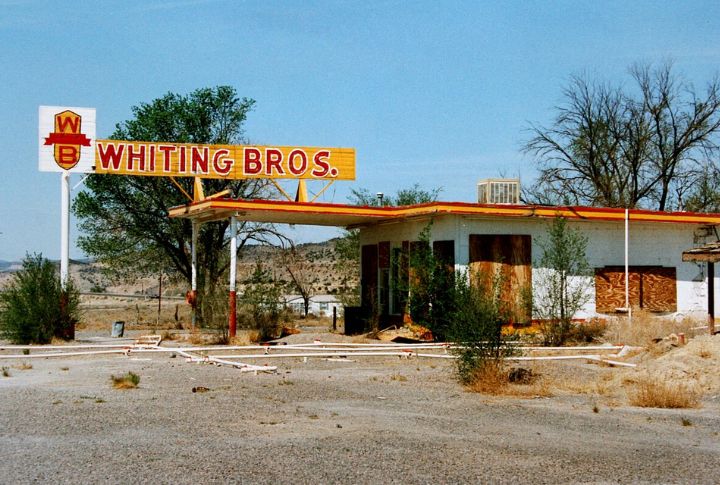
Fueling the Southwest with red and yellow pride, Whiting Brothers stations once numbered over a hundred. Known for low prices, they were the budget traveler’s best friend. The Moriarty, NM, location still stands, lovingly restored with help from the National Park Service. Its nostalgic charm reminds us that cheap gas once came with warm smiles and free ice.
Soulsby Service Station — Mount Olive, Illinois
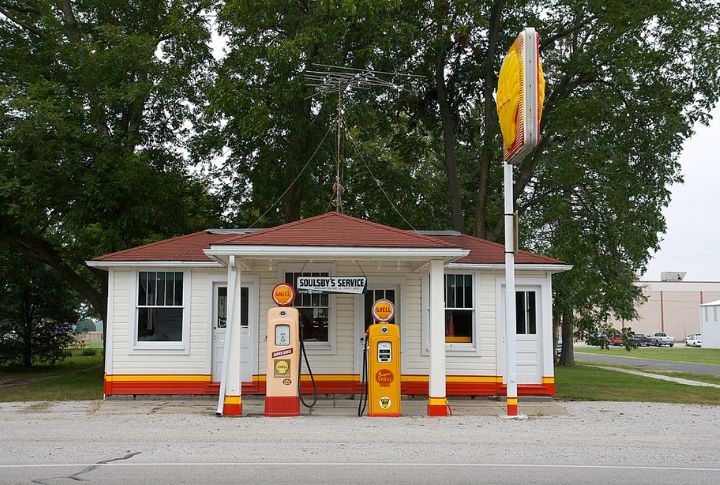
The Soulsby Service Station, built in 1926, holds the distinction of being the oldest usable service station still standing in Illinois on the historic Route 66, also known as the Mother Road. Its design resembles a small home with a protective overhang. It is a textbook example of early roadside architecture meant to reassure weary travelers.
Frank Lloyd Wright–Designed Gas Station Proposal – Cloquet, Minnesota
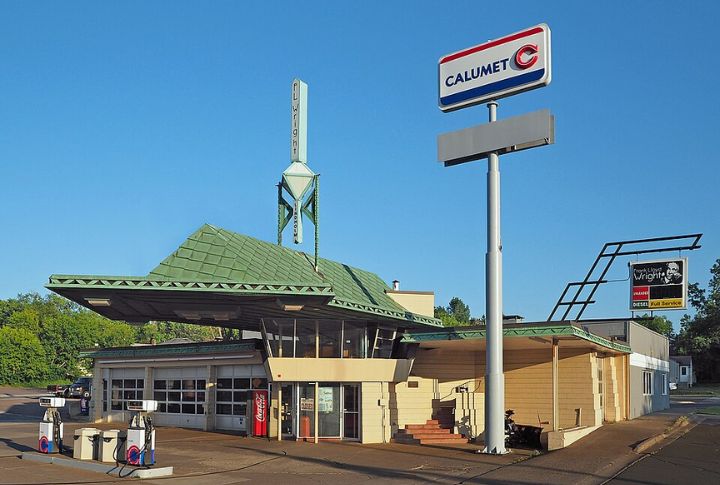
While never fully built, Frank Lloyd Wright sketched a concept for a gas station with an observation tower overlooking the pumps that was intended to merge utility and architectural spectacle. Though aspirational, its design vision highlights the era when motorists demanded modernity and flair at every stop.
Baxter Springs Independent Oil and Gas Service Station – Baxter Springs, Kansas
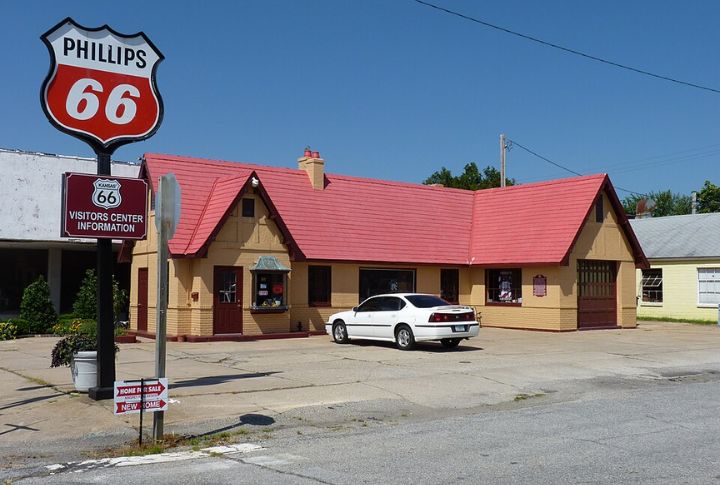
Like a miniature Tudor cottage set beside the pines of southeast Kansas, this 1930 Independent Oil and Gas Company station was born to charm Route 66 travelers through domestic familiarity. It was restored in 2007 and transformed into the Baxter Springs Route 66 Visitor Center. Today, the same octagonal canopy still shelters visitors.