‘Not attacking my manhood,’ Delta Force Sergeant’s road rage philosophy goes viral
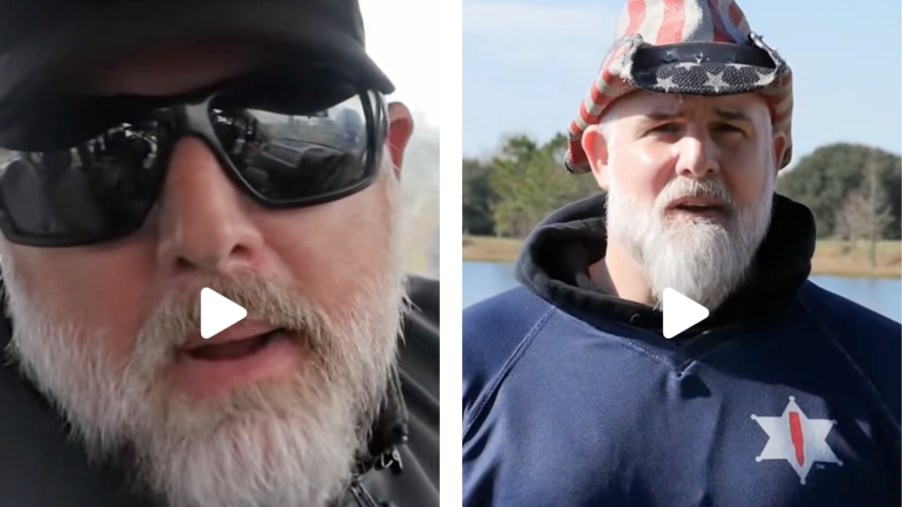
Sergeant John “Shrek” McPhee is a very dangerous man. The U.S. Army Special Operations Sergeant Major earned the nickname “The Sheriff of Baghdad” while deployed. After 20 years of service, he retired in 2011 to found SOB Tactical, teaching marksmanship and special operations to organizations worldwide. Yet one of his most popular social media posts of all time is a video of him choosing to avoid violence. You can see it below, and keep reading for my counterpoint.
John “Shrek” McPhee revisits his viral road rage video
In the viral video, McPhee sits in his vehicle, speaking to the camera while an actor screams at him and pounds on the windows. McPhee says, “Let him do what he’s gonna do.” His philosophy on the threats and verbal abuse: “It’s not attacking my manhood. I don’t care what he calls me.” The video title explains why. “Your vehicle is your best defense.” McPhee adds, “He wants me to fight him. Ridiculous.” He points out that his safest option is to ignore the insults and to stay in his vehicle. “So long as my car is locked, my windows are intact, I’m safe.”
McPhee has a legal reason to ignore the man too. Responding to verbal threats with physical force puts him in the wrong. “So right now, is this deadly force? The answer is no. There’s nothing we can do in this situation. Just let him go.”
For a later lesson, McPhee summarized his popular “road rage video.” “Something happens, right? Guy gets out of the vehicle, right? Comes up to your vehicle.” The incident appears violent, but it’s mostly empty threats: “The guy I had was, I think, banging on the vehicle I was in with a tire iron.” His response? “Hey man, dents can be fixed. You know what I mean? Like, uh, you can do anything you want to the car.” He’s right. And if he gets the angry driver’s license plate, he might even be able to sue him to pay for the dent repair.
McPhee added some tactical advice in his summary. “Don’t make eye contact, don’t engage.” He explains, this doesn’t mean close your eyes. “You still want to watch the person. You still want to see what they’re doing, but you really don’t want to engage with them, so they’ll get the hint that you’re not interested and eventually get tired or the situation changes where you could just drive away.”
Road rage is on the rise
A short snippet of Sergeant McPhee’s road rage video earned 39,000 likes on TikTok, 1,316 comments, and was saved 2,316 times. His philosophy is inspiring a discussion. The reason the topic is so popular might be the rise in road rage.
CNN reported a 500% rise in reported cases of road rage in the past decade. The Zebra insurance marketplace added that 96% of drivers surveyed had witnessed road rage—in the past six months. According to the AAA Foundation for Traffic Safety’s 2019 data, nearly 80% of drivers expressed significant anger, aggression, or road rage behind the wheel in the past 30 days.
The Safe Motorist website reveals that these incidents are taking a toll. In just seven years, 12,610 injuries and 218 murders could be traced back to road rage.
Avoid fighting fire with fire
The philosophy is simple: “He wants me to fight him. Ridiculous.” You have your own safety to think about, you have your passengers’ safety to think about. Remove your ego from the equation and don’t engage with road rage.
It’s logical. And it’s backed up by science. Bjureberg et al. (2021) found that while suppressing anger doesn’t help, reframing the situation can reduce aggressive responses. If someone’s screaming threats and insults, repeating that they aren’t “attacking my manhood” isn’t the worst mantra.
I’ll add that taking this nonviolent “high road” during a yelling match at a stoplight isn’t a bad way to de-escalate. But it may be too little, too late. Removing your ego from a confrontation is great. But removing your ego from your driving may prevent the confrontation in the first place.
Is aggressive driving leading to more road rage?
In 2024, the Pew Research Center revealed, “About half of Americans (49%) say people in their area are driving more dangerously than before the coronavirus pandemic.” The same study adds, “Most Americans see cellphone distraction behind the wheel as a major problem in their local community.” In addition, the latest AAA Traffic Safety Culture Index highlights an uptick in perceived threats from speeding and aggressive behaviors.
Annoying driving behavior doesn’t justify rage and violence. But aggressive driving is on the rise, and it may be leading to more road rage. Removing your ego while behind the wheel could actually prevent a confrontation before it even begins. Here are some driving behaviors to avoid:
- Tailgating. Stephens et al. (2023) surveyed drivers and found, “77% had tailgated other vehicles.” Sure, it’s frustrating when a slowpoke is camping out in the highway’s passing lane. But instead of hugging their bumper, try flashing your high beams to signal them to let you pass.
- Blocking mergers. The AAA found that 24% of aggressive driving behavior is “trying to block another vehicle from changing lanes.” Maybe you have cruise control set and don’t want to mess up your flow by hitting the brakes. But slowing to let other folks merge is just plain polite. You’ll be back up to full speed before you know it.
- Running red lights. Nobody likes to sit at a red light. But running lights can cause a crash at worst. And at best, you block someone else who had been waiting to go and finally got a green light. According to the AAA’s 2019 Traffic Safety Culture Index, 86% of drivers thought it was very dangerous to run a red light, but 31% reported doing so in the past 30 days. You know it’s wrong, so why do it?
- Weaving through traffic, passing at high speeds. It’s jarring when you’re cruising quickly and a speed demon passes you like you’re sitting still. Yet The Zebra reports that 63% of survey respondents had witnessed it in the past six months. The NHTSA warns that driving too fast “accounted for 18.5 percent of fatal crashes.” Slow down, wait for traffic to clear, don’t pass on the right.
- Texting and driving. Crashes are up. Pedestrian deaths are up. The main culprit is likely distracted driving. You can’t safely take your eye off the road, so don’t. The National Academy of Sciences found that 90% of drivers in recent crashes were contributing—whoever was deemed “at fault”—and the problem was often distracted driving. The conclusion: texting and driving is six times more fatal than drunk driving.
In conclusion
I agree with Sergeant McPhee. If someone is pounding on your vehicle with a tire iron and you can drive away instead of fighting them, drive away. But slowing down and being more thoughtful on the road may keep them from taking a swing with that tire iron in the first place.