The 9 most confusing features of semi truck tractor cabs
Most of us commute on highways full of semi trucks every day. But few of us truly notice the big rigs we share the road with. When you study a tractor trailer cab you’ll find a ton of confusing feature: Why do semi truck cabs have a tiny window by the passengers feet? Why do many old trucks have a big chrome barrel hanging from their cab? Here are the answers.
Table of contents
- Why do some semi trucks have a tiny window by the passenger’s feet?
- Why do some semi trucks have a tiny window at the top of their cab?
- Why do semi trucks have spiked wheels?
- Why do some semi trucks have big silver barrels on their cabs?
- Why do semi trucks have yellow lights on their roofs?
- Why do some semi truck exhausts have metal flaps on top?
- Why do some semi trucks have chrome trumpets on their roof?
- Why do semi trucks have all those hoses connecting the cab and trailer?
- Why do semi trucks make so much noise when they slow down?
Why do some semi trucks have a tiny window by the passenger’s feet?
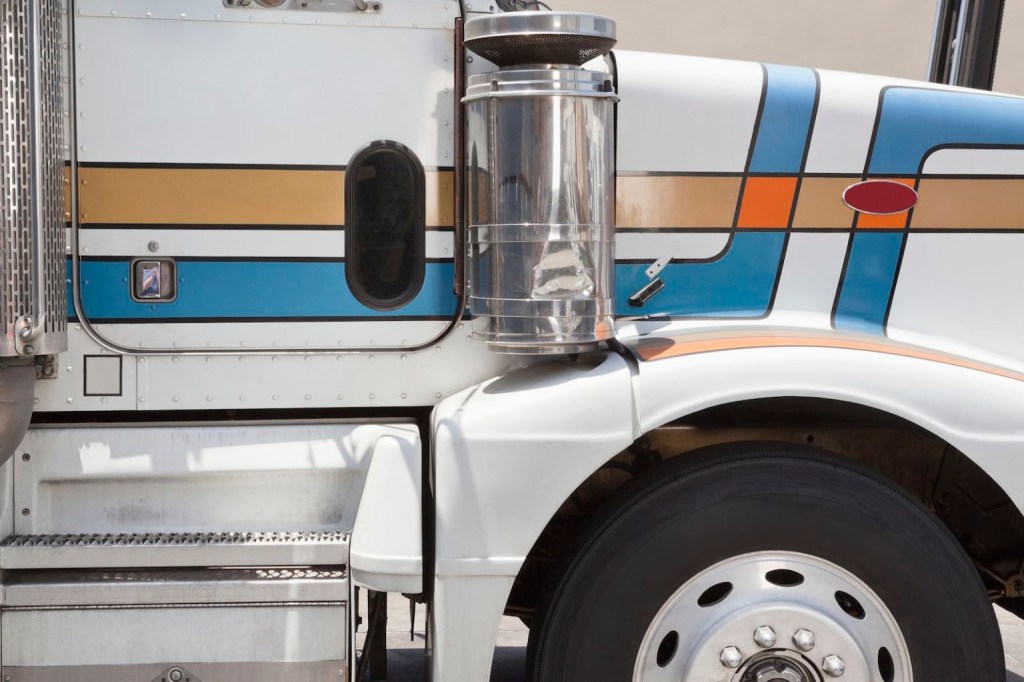
No, these bizarre little portholes aren’t for truckers who have a little pet onboard. They are windows designed to reduce a truck driver’s blind spots. Namely, the window at the bottom of the passenger-side door helps the driver spot cars passing them on the right. Many semi truck drivers have a three-lane-wide blind spot, preventing them from seeing anything behind the cab on the right side of the truck. Read up on truck blind spots and the tiny window in the door.
Why do some semi trucks have a tiny window at the top of their cab?
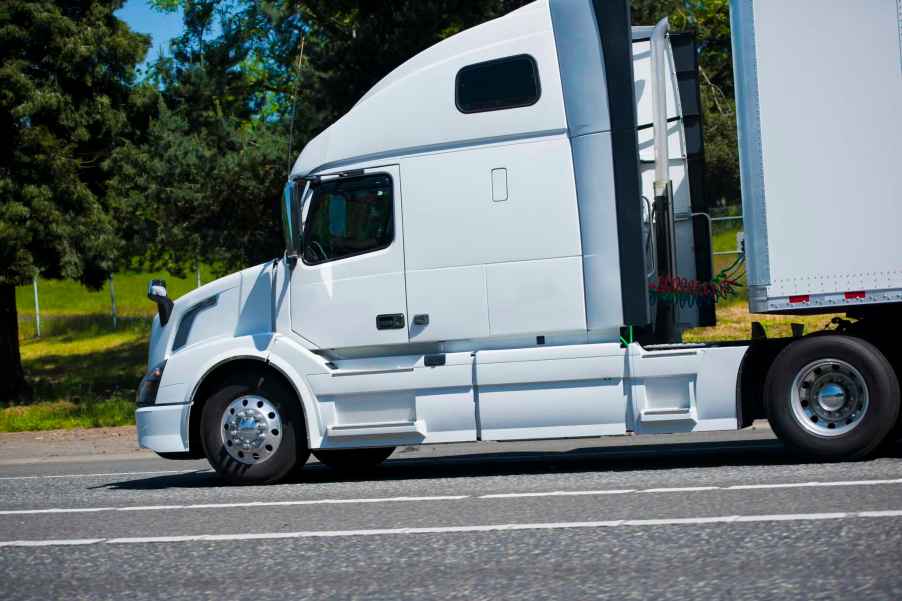
The odd little window at the top of some large semi truck cabs may make you do a double-take. This just means the truck tractor has a “sleeper” cab configured with an upper bunk, often above the driver’s seat. This window can make the tiny RV space less claustrophobic. It also allows the driver to see what’s going on outside without climbing all the way down to the windshield. Learn more about semi truck sleeper cabs and why drivers need them.
Why do semi trucks have spiked wheels?
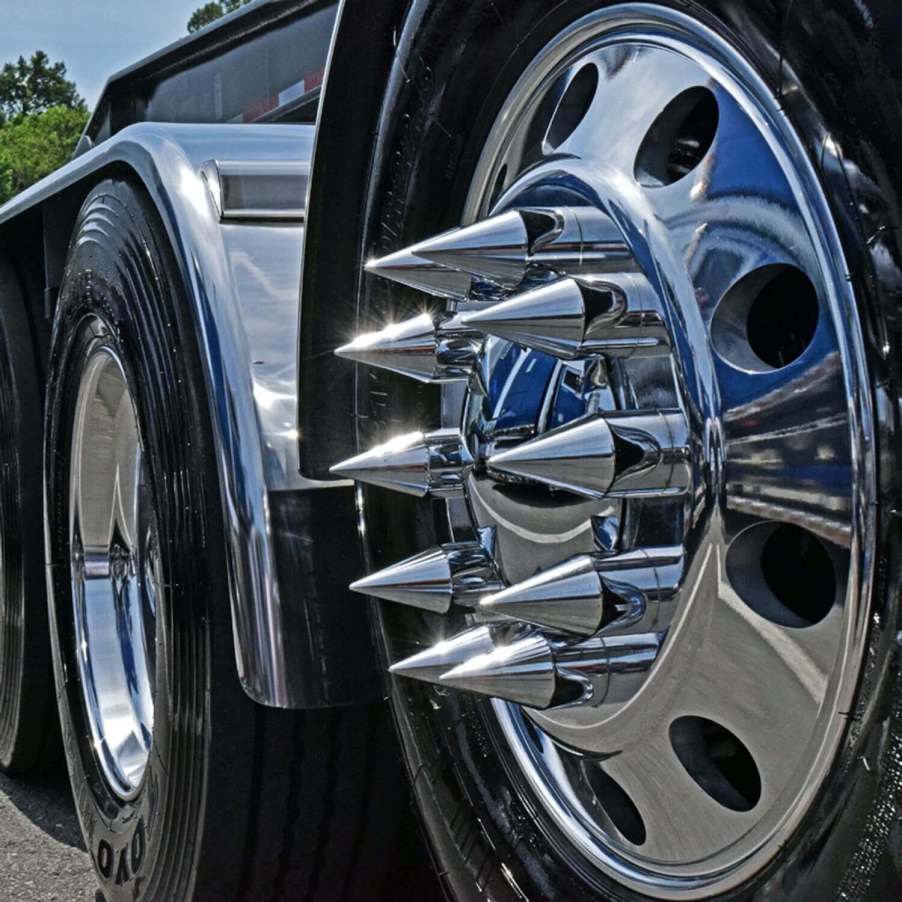
If you notice spikes on the wheels of a semi truck, you’re probably looking at plastic, spike-shaped lug nut covers. But these accessories have become so common, there are several variants available. This includes hubcap wheel covers with a series of spikes to replicate spiked lug nut covers. Some companies selling these covers claim they protect lug nuts from dirt, while the spiked shape sheds moisture that might rust the metal beneath. But some truckers who install them admit they’re just to look cool, or to encourage car drivers to keep their distance. Find out why semi truck wheel spikes aren’t actually dangerous.
Why do some semi trucks have big silver barrels on their cabs?
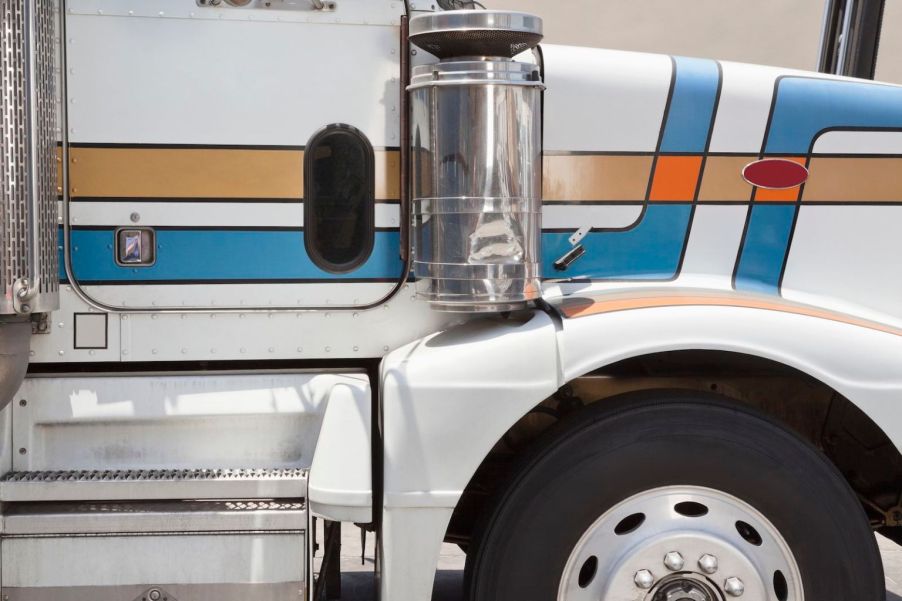
Big semi truck engines need to breathe a ton of air, and they must filter this air. Early semi trucks had a big external barrel-shaped air filter. Many of these were covered in chrome, so they were easier to clean. And they looked cool. These trash-can-sized barrels aren’t great for aerodynamics. So the latest semi trucks move air filters elsewhere. But the big silver barrel hanging from a classic semi truck’s cab is still iconic.
Why do semi trucks have yellow lights on their roofs?

Watching a semi truck roll by at night can be about as interesting as staring at a Christmas tree wrapped in lights. Many semi trucks have a row of amber lights along their roof. But if you look closely, you may also see lights along the bumper and at the outer corners of the cab. The U.S. government requires such marker lights on all “oversized” vehicles. The logic is that on a two-lane road, they warn drivers about the size of the oncoming vehicle. But the amber color is less likely to blind drivers. Find out when pickup trucks need amber marking lights on their roof.
Why do some semi truck exhausts have metal flaps on top?

On many roads, semi trucks are allowed to pull trailers a long as 48 feet. That’s a long vehicle, and it would be a very long way to run a traditional rear-exit exhaust system. So semi truck cabs have exhaust “stacks” that carry the engine exhaust up above the trucker and other nearby drivers before releasing it into the air. Some trucks have angle-cut exhaust pipes so rain doesn’t fall directly into the system and rust the pipes. Other trucks have flat-cut pipes that end in a “rain cap” engineered to flap open whenever the exhaust system builds up pressure. You can find out how truckers drain the system if their rain flaps fail.
Why do some semi trucks have chrome trumpets on their roof?

The chrome trumpets on the roof of a semi truck cab are airhorns to get other drivers’ attention. Your regular passenger car uses an electronic horn. But semi trucks all have a powerful air compressor to compress air for systems such as its brakes. Blowing this air across a metal reed or diaphragm is a great way to make a lot of noise in an emergency. Truckers can even switch between an electronic horn and air horn.
Why do semi trucks have all those hoses connecting the cab and trailer?

Remember how semi truck cabs have an onboard air compressor because multiple systems rely on 100 psi compressed air to operate? Well the brakes that slow the trailer’s wheels also need compressed air to operate. The last step to hooking up to any trailer is connecting the compressed air hoses between the truck and trailer. Read why semi truck trailers also have one exlectric extension cord connected to the cab.
Why do semi trucks make so much noise when they slow down?
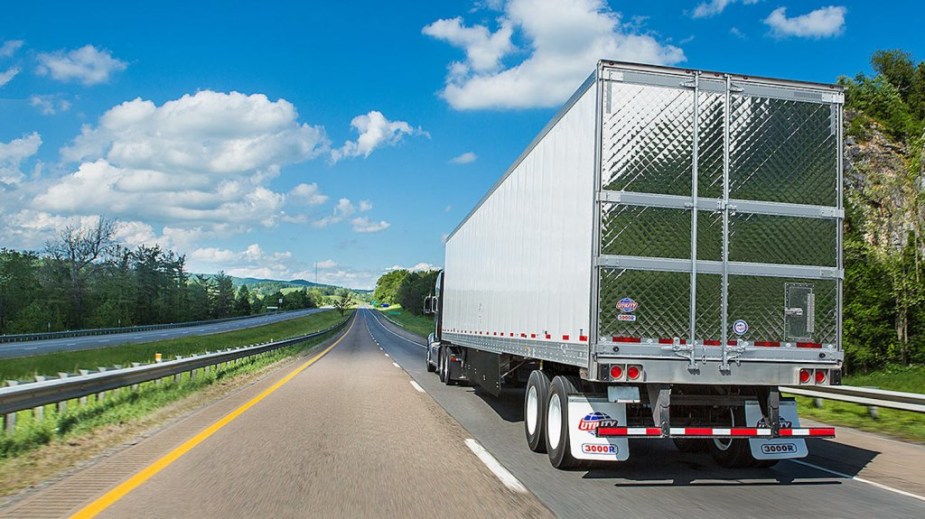
If you’ve ever stopped at a light and had a semi truck stop behind you, you might have experienced the deafening “ratatatatatat” sound of a Jake Brake. Remember that semi trucks use compressed air to activate the brakes that slow their cab and trailer wheels. But what if a trucker needs more stopping power? They can activate a Jake Brake which opens the engine’s exhaust valves to release compression and slow the truck down. You can read about why this is an even more critical feature for a diesel engine. But suffice it to say, opening up the exhaust valves in this way gets noisy.