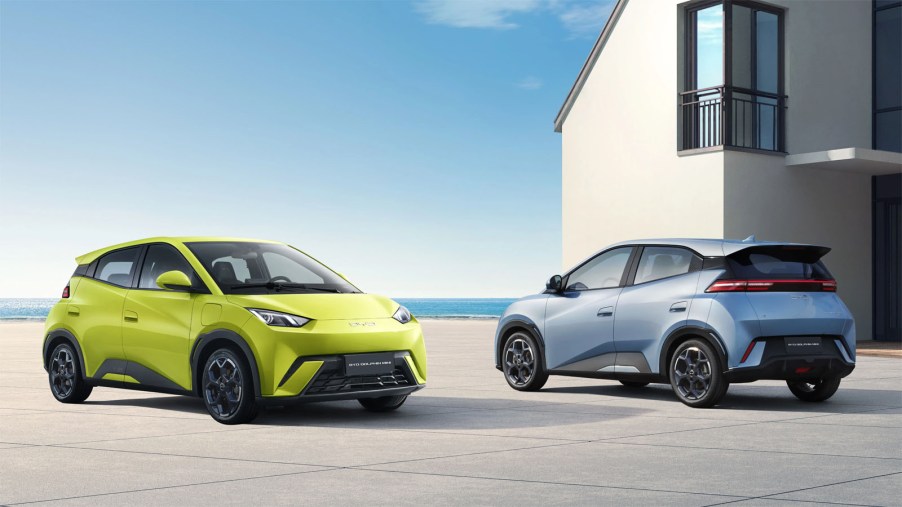
Chinese Automaker BYD Sues the US Government Over Tariffs Keeping Its Cars out of America
United States-based subsidiaries of the Chinese automaker BYD filed a lawsuit against the U.S. government over tariffs that keep their vehicles out of the U.S. market.
BYD America LLC, BYD Coach & Bus LLC, BYD Energy LLC, and BYD Motors LLC are suing the U.S. federal government and officials from the Department of Homeland Security, Customs and Border Protection, the Office of the U.S. Trade Representative, and the Treasury Department.
According to court documents obtained by Chinese magazine Caijing, the lawsuit challenges nine executive orders and their amendments issued since February 2025. BYD claims the U.S. government lacked the statutory authority to impose tariffs under the International Emergency Economic Powers Act (IEEPA), as “the text of IEEPA does not employ the word ‘tariff’ or any term of equivalent meaning.” Therefore, all of the related tariff orders should be declared invalid.
BYD seeks a refund of all IEEPA tariffs levied against it, plus interest as required by law, while awarding it reasonable litigation costs. Making the tariffs illegal would also make it easier for BYD to sell vehicles in the U.S.
Currently, BYD’s main U.S. business involves new energy buses and commercial vehicles, as well as energy storage systems for municipal transit and utility projects. They also supply electric vehicle batteries and solar panels to various U.S.-based companies.
What would a legal victory by BYD mean to the American automotive market?
Naturally, BYD would also like to start selling the automobiles to U.S. consumers. BYD recently surpassed Tesla as the world’s number one EV seller.
According to Caijing, if BYD wins the lawsuit, it could open up the American market to its passenger car business. That, in turn, could open up the market for other Chinese automakers like Zeekr.
Canada’s recent trade deal with China, allowing the import of all-electric vehicles, will allow China to send 49,000 electric vehicles (EVs) into Canada at a 6.1 percent duty rate, down from the current 106.1 percent. That move caused considerable consternation among the Global Automakers of Canada, General Motors, and others.
According to a recent poll, 61% of Canadians support allowing more Chinese electric vehicles into the Canadian market. The number includes 24% who strongly back the move.
After all, Yangwang, a subbrand of BYD, recently saw its U9 Xtreme EV hypercar beat Bugatti to become the fastest car ever. Who wouldn’t want one of those?