China Licenses Its $32,000, 429-Horsepower Tesla Roadster Killer for Assembly Abroad
There’s no law that EVs must sacrifice mechanical soul for futuristic technology. A small Chinese startup has created a raw, lightweight electric sports car. It costs about 1.5% of the MSRP of a Rimac Nevera. Now, the company plans to assemble European versions in Italy.
The SC01 could become the next Mazda Miata. It only needs an actual model name.
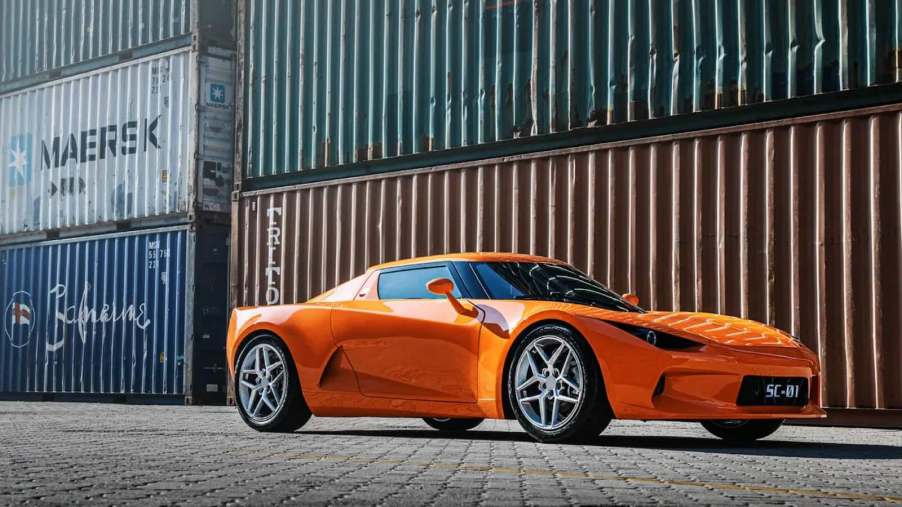
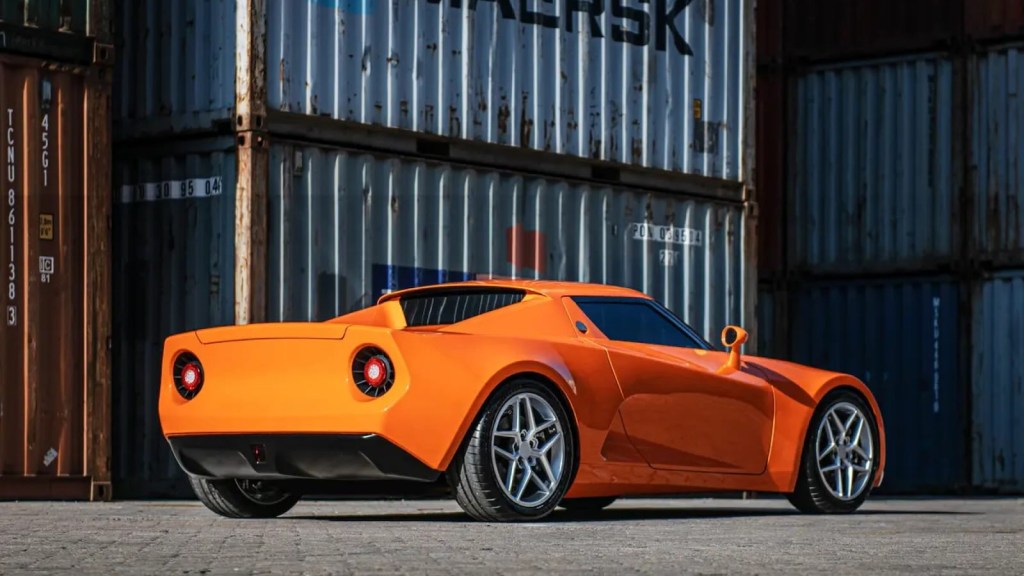
China’s auto market is crowded with startups, many of which will fail. Tianjin Gongjiangpai Auto Technology went against the grain. Instead of a massive electric supertruck like we see from Rivian, it focused on a 3,000-pound, two-seat coupe. The car uses motors at both axles to produce 429 horsepower. The company claims it hits 62 mph in 2.9 seconds.
The SC01 weighs about 500 pounds more than a Miata. It is lighter than a Porsche Cayman GTS. With a stiff space-frame chassis and pushrod suspension, it could actually challenge the Cayman in corners.
A refreshingly raw electric sports car
Most Chinese automakers favor touchscreen-only interiors. TGAT chose a different path.
Picture approaching the low-slung concept. You drop into the seat and turn an aircraft-style knob. With a tactile click, the car switches into rear-wheel-drive mode. Want to really throw the rear end around? The SC01 has a mechanical handbrake!
The car does include a single digital instrument screen. But it has physical controls for most key functions, including HVAC.
An EV built for real-world driving
The coupe carries its battery between the cabin and rear axle. The layout gives it similar balance to a mid-engine ICE. Its size and shape is similar to the Lotus Emira and Alfa Romeo 4C. The SC01 currently uses a 60-kWh battery. China claims a 311-mile range.
That figure works out to an optimistic but achievable 5.18 miles per kWh. The Lucid Air can exceed 5 miles per kWh under certain conditions. That sedan weighs far more.
Depending on chemistry, the battery weighs between 700 and 1,300 pounds. A future 40-kWh version could make sense. It would shed up to 400 pounds and lower the price. Fast 800-volt charging could offset the reduced range. That architecture could also unlock higher peak engine output and much better performance.
The future of the TGAT SC01
Chinese startups must partner with licensed automakers to sell cars domestically. TGAT now sells the SC01 through a partnership with Xiaomi and JMEV. The price equals about $32,000 USD.
That is not the only deal in place. A new company called SC01 Europe plans to assemble the car in Italy. It says the model will “prove EVs can still be raw.” The company plans a 1,000-unit run. Pricing will start around $71,700 USD. It says the SC01 will “never be offered again” in Europe. Let’s hope that part is wrong. You can see the SC01 reviewed in the video below: