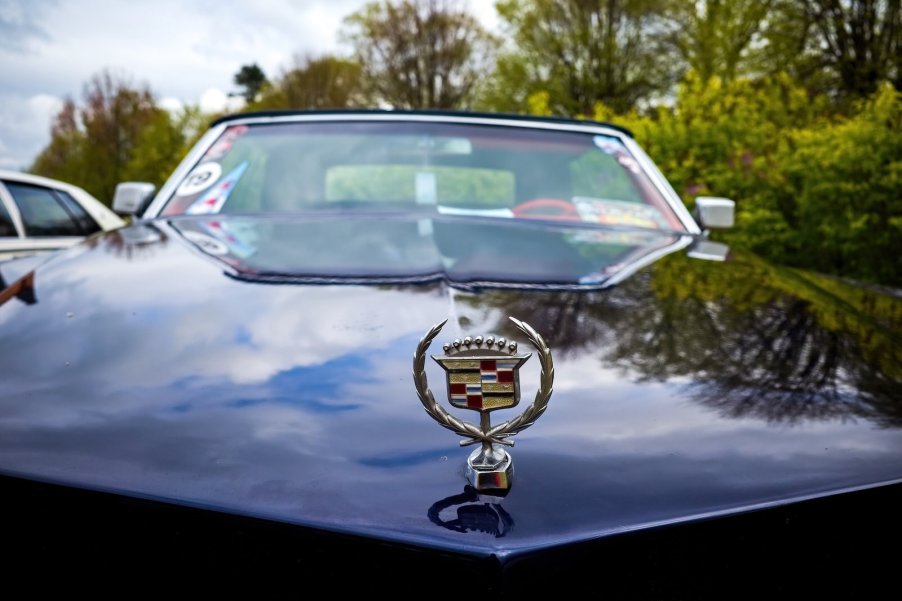
Is Cadillac named after a con artist?
In 1902, Detroit investors were searching for a name for a new car company. They knew Detroit had been founded by Antoine de la Mothe, sieur de Cadillac. Historical records even included his fancy, French coat of arms. So they slapped the glitzy name and badge on their luxury cars. There’s only one problem: There was never truly an Antoine La Mothe de Cadillac. But the truth may be the most American story ever.
The invention of Antoine Cadillac
Yes, a French navigator and military officer founded Detroit. He was born Antoine Laumet in a small village in 1658. His dad became a lawyer but died with debts he passed on to his son. So like many other Europeans of the era, Antoine decided to start over.
He likely stowed away on a ship bound for what’s now Nova Scotia. Laumet landed in New France in 1683. When first asked for his name, he thought, Why just be a peasant? and he wrote down “Antoine de Lamothe, écuyer, sieur de Cadillac.” He even added a little coat of arms. What’s all that mean in English? Let’s just say it was a huge promotion.
Laumet was essentially claiming he was related to the Baron of Lamothe-Bardigues, lord of a castle called Cadillac. It was a carefully calculated choice. The noble title sounded enough like Laumet that if someone recognized him and shouted his real name in a bar, he might not be outed. But it wasn’t a random choice.
He later wrote that he did create the identity, but it wasn’t “out of nowhere.” The title was based on the noble Esparbès de Lussan family. Laumet’s dad had worked as a lawyer for the Baron at Parliament, and Antoine went to school with his son. So when he needed to steal a crest, he just copied from his classmate.
He gave himself the title “écuyer,” which translates to squire. By the late 1600s, this didn’t mean squire in the traditional sense, but it instead suggested he was the noble family’s second son. This would have made him fit right in, in the New World.
Antoine Laumet seeks his fortune
The young Frenchman traveled from Nova Scotia as far as the Great Lakes and what is now the Carolinas. He found a Quebec merchant to be his business partner, then married the merchant’s daughter (Marie-Thérèse). In 1688, the governor of New France gave him a remote farm that is now Bar Harbor, Maine. Cadillac named the tallest mountain on Mount Desert Island after himself. He also borrowed a ship from his brother-in-law and tried to set up a trade route with Port Royal, though he never had much success.
Cadillac was on a scouting mission for France down the New England coast when the ship was blown out to sea and returned to Paris. There, he got his first big break when he was able to charm the Marquis de Seignelay, who was Secretary of State for the Navy.
He returned home to find his wife and children had been captured by the English. He was able to negotiate their release and move everyone back to Quebec—but had to fight off pirates to do so. With his new connections, Cadillac was promoted to lieutenant, then captain, then lieutenant commander. He was given command of the upper fur trading stations and sent on multiple mapping missions. It was Cadillac who had the idea to establish a French fort on the straits between Lake Erie and Lake Huron to compete with the English and better control trade. This strategic location would eventually become Detroit.
Officials in Montreal tried to squash the project, worried Cadillac would found a more powerful city. So he had to return to Paris and pitch his idea to Pontchartrain himself. He got the green light. Detroit was a financial and military success, and Cadillac was eventually promoted to governor of Louisiana.
Was Antoine Cadillac a con artist or just a rascal?
Like many of the founders of modern North America, Antoine Laumet was a bit too ambitious to ever fit in back in the Old World. Scholar William J. Eccles called him one of the “worst scoundrels ever to set foot in New France.”
We know he spent a few months of 1704 in prison in Quebec. The Jesuit church accused him of “perverting” the Native Americans by trading alcohol for furs. In 1708, the French government sent a commissioner to inspect Detroit and found Cadillac had exaggerated the number of households in his report for financial reasons, and was charging “excessive” rent to the settlers who were there.
When he completed his term as Louisiana governor, he returned to Paris and was again thrown in jail—this time for five months. Why? He’d called out the corporation that controlled Louisiana for lying about how prosperous the colony was to French citizens back home.
Cadillac was certainly a bit rough-and-tumble. But so were his times. And while he wasn’t technically born a noble, he made himself one. After Cadillac left his Louisiana position, the Crown named him governor and mayor of his old hometown, where he eventually returned to retire. So like the self-made countries of North America, Cadillac’s may be the most “American” family story ever. The irony is that when he first penned his fake name and crest, he didn’t imagine anyone in Europe would hear about it. But 300 years later, both his name and crest are known the world over.