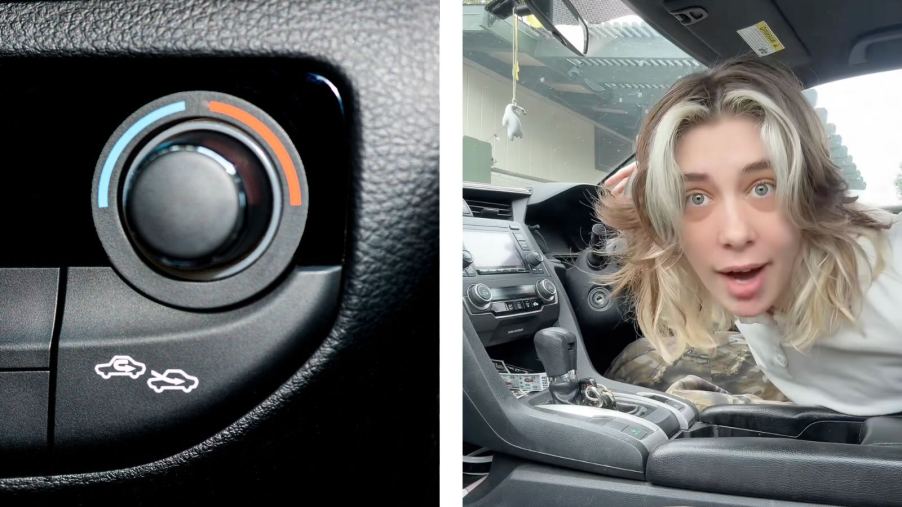
Hitting the wrong button during a long drive can leave you sleepy or sick
Bella Rose Avila grew popular on TikTok sharing fun facts and life hacks on her account @OnlyJayus. In one video with more than 138,000 likes, she warns about leaving your car’s “recirculating air” feature on for too long.
“When you’re driving for a long period of time, you should really turn off the recirculating air button or at least roll down the windows because a lot of the times when you get tired while driving, it’s not because of a lack of sleep. It’s a lack of oxygen. There’s too much CO2 in here.”
You can see the @OnlyJayus video embedded below, or keep scrolling for my fact-checking.
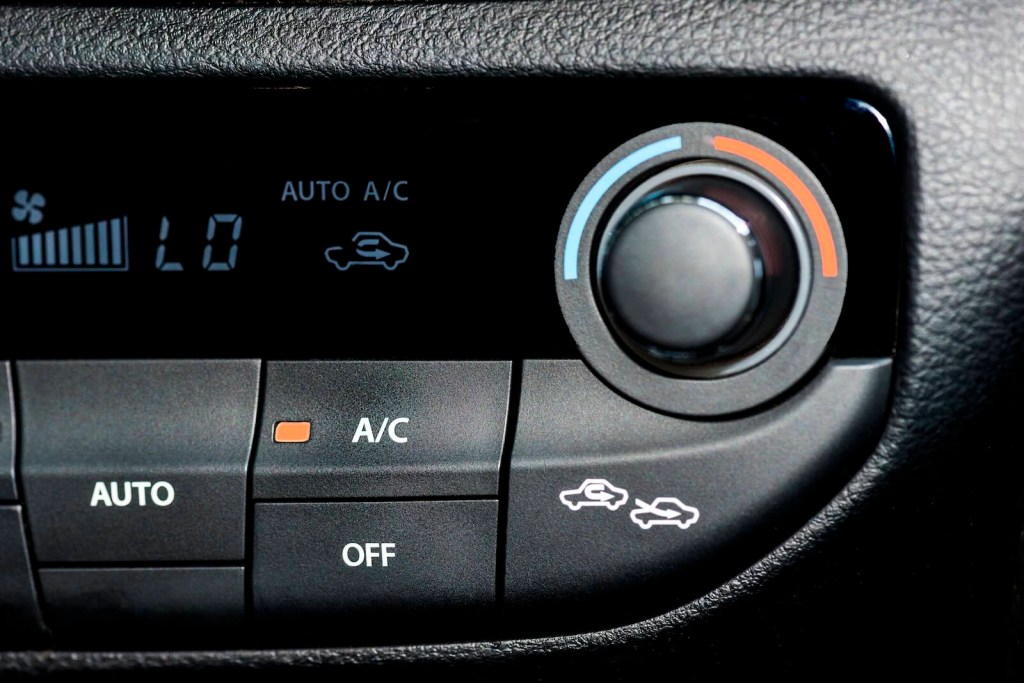
Air recirculation is the button with arrows in a circle—or a U-turn arrow inside a car’s outline—on your HVAC system. It pulls air from inside the cabin instead of fresh air from outside the car.
I was intrigued by the idea that recirculating air could contribute to sleepiness, carsickness, or even highway hypnosis. Obviously, lack of oxygen and increased CO2 can cause multiple health issues, including drowsiness. But I wanted to know if leaving “air recirculation” on could actually cause it.
The Drive.com explains that the air recirculation setting is great for cooling you down on a hot day: it feeds your A/C unit the same air several times, cooling it down further. It can even be useful when driving through smoke (near a fire or crash) or by something especially stinky (say, a skunk or roadkill).
The site does warn against leaving it on during a road trip. Symptoms: feeling tired. It quotes Eton Ng, senior climate control attribute engineer at Ford Australia: “Because we are in a sealed space, the CO2 can increase when using recirculation mode.”
Here’s a rough calculation: There’s about 160 cubic feet of air in the cabin of a modern compact sedan. One person can go through all the oxygen in 20 cubic feet of air in one hour. So five people could go through 200 cubic feet of air in just two hours. But those numbers are for survival, not comfort. CO2 could build up long before oxygen runs out completely. A slight reduction in oxygen can also affect your brain. So yes, a couple of hours driving in a sealed sedan could make you feel tired.
On your next roadtrip, switch off air recirculation or crack a window every hour.