Scientists: Your Bumper Sticker Is Triggering Road Rage
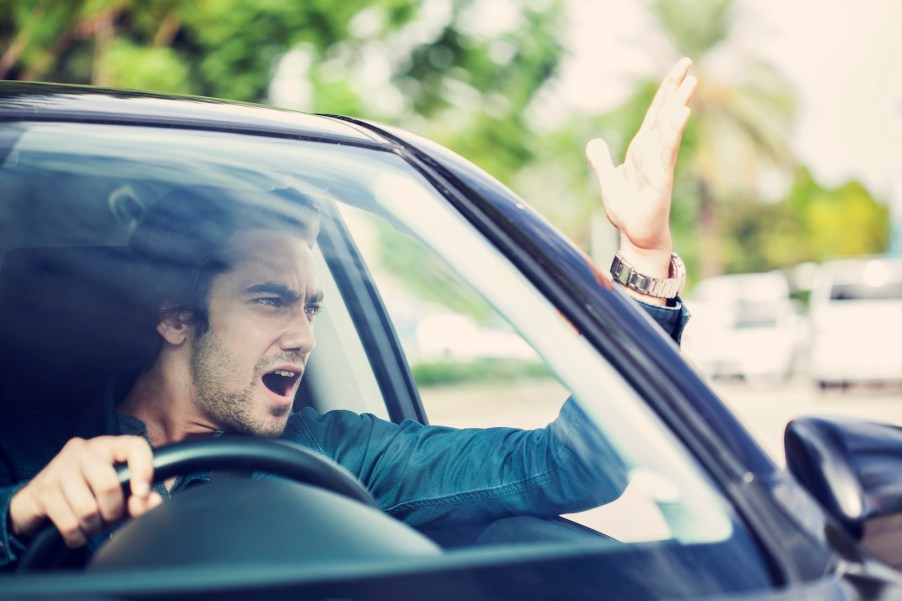
Yes, that political sticker on your bumper can trigger other drivers to road rage levels of anger—according to scientists. But only if you’re also a bad driver.
Professor Rachel Torres teaches political science at the University of Cincinnati. She and her colleagues had a simple question: “Has American car culture been politicized? Has it become more partisan?” The answer was a resounding “yes.”
Researchers sat a ton of volunteers down to watch simulated dashcam footage. The footage showed an SUV swerving in front of the participant’s car without signaling. Then they asked the volunteer if they would have honked at the other driver for poor etiquette and safety. They found answers often correlated to a detail most wouldn’t have even noticed: a political bumper sticker on the other SUV’s bumper.
Bumper stickers spark anger, but only if you’re driving like a jerk
These stickers weren’t too inflammatory. They just read “Proud Democrat” or “Proud Republican.” (The control group got an “I love my dog” bumper sticker—no word on how cat people reacted to that one.) But when the study participant encountered a bad driver from the opposite political party, they were much more likely to honk.
I find this especially fascinating because there are honestly two kinds of honks. There’s a calculated “warning honk” and there’s a blind “angry honk.” Sitting in a lab and watching supposed dashcam footage, I doubt the participants would have been moved to an “angry honk,” and if so, they might not have admitted it. More likely, they were saying “I would have used a little warning honk there” to teach the other driver a lesson. But apparently, even these calculated choices can be politically motivated.
Torres suspects that the combination of bumper sticker and thoughtless driving triggered dormant anger. “It activated their partisan hostilities… These feelings are just below the surface for many people.”
To me, the saddest thing is that when the participants encountered another driver from their own political party, they weren’t extra kind to them. “We never found bumper stickers to have a positive impact. They didn’t improve people’s perceptions of their group or other groups.”
Torres also says, “We have a unique car culture in the United States. American identity is often tied to owning a car and how you choose to decorate it.” I’d love to see the same study done with different makes and models of cars. Are participants more likely to honk at a lifted truck? A BMW? What about cars often associated with certain political parties, such as diesel trucks or EVs? Such a study could give us car enthusiasts some fascinating data on public perception of the vehicles we drive.