You can reserve a Slate EV for $50, but will you actually ever get one?
The car world is chattering over Slate’s affordable, U.S.-built EV concept it revealed this week. A quick Google or scroll on social media and you’ll find walk-arounds of the soon-to-be-manufactured Blank Slate, the company’s first proposed all-electric release. Right now, you can hop into the build page and play around with customization options. For fifty bucks, you can reserve one – but considering all current factors, will you actually ever see a delivery?
I’m talking about whether 1. It’ll really be mass-produced, and 2. It’ll truly cost U.S. buyers $20,000.
Blank Slate EV specs and features define “affordable”
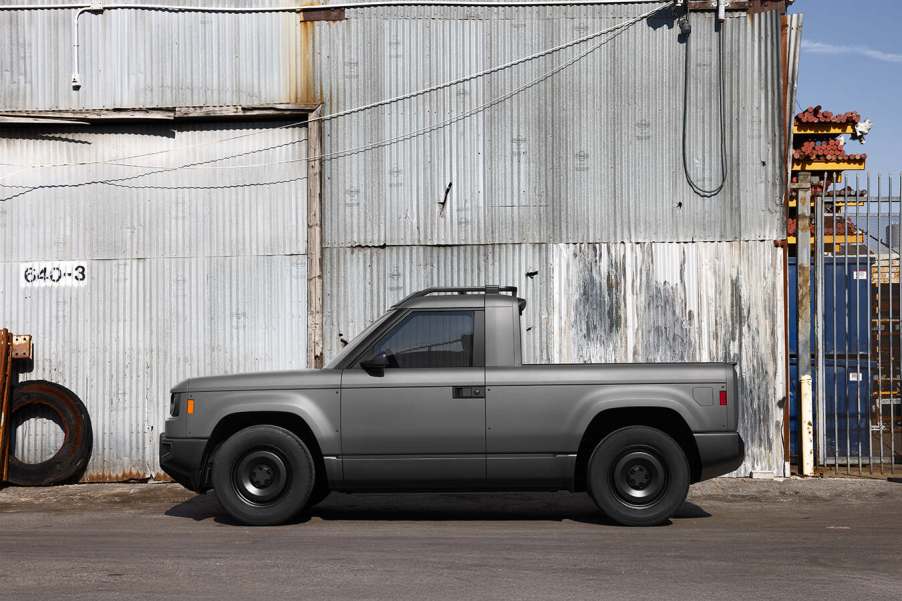
The Blank Slate is a compact pickup truck that’ll be about 14.5 feet long. For perspective, that’s about two feet shorter than the Ford Maverick.
The name means something literal, here. By dubbing the truck Blank Slate, the automaker makes it clear that if you want anything extra (an exterior color wrap or Bluetooth, for instance), you’ll have to purchase one of Slate’s 48+ accessory add-ons.
It doesn’t have a radio, speaker, or any infotainment screen at all. Slate hopes you’ll be cool with just plugging in your phone or tablet. And they’re not wrong…a lot of drivers hate factory options anyway.
The EV comes with cool features, for sure. For instance, you can convert it into a five-passenger SUV via a body panel kit. Slate’s sort of marketing this conversion kit to families. We have two kids, so I’d need to see crash test results and final accessory pricing before saying whether I’d realistically tote the whole fam around in one. Considering what I know so far, which is that it’s not a factory-constructed unibody, I’m just not sure I would.
If you ask whether Slate offers fully loaded versions of the EV, the answer is simple: “We don’t.” You have to purchase kits or individual accessories to build one out however you’d like. Right now, interested buyers don’t have an idea of what the kits or individual accessories cost yet. More on this below.
Charging a Blank Slate might be a headache like all the rest
The base option’s 150-mile range already challenges folks who want something they can get into without feeling anxious about battery life. Charge time looks worrisome to me, too.
For owners using a Level 1 AC household outlet – just your standard outlet you’d plug your toaster into – well, don’t even bother. On the slower end, Slate says it could take up to 75 hours to charge it up to full range.
If you use a Level 2 AC charger, which is the same style a clothes washer or dryer uses, it might take up to eight hours to achieve a 20% to 80% range.
Many EV owners, including Tesla, for example, lament sitting at a Supercharger for 30 minutes to end up with less than a full charge. Expect the same for the Blank Slate…despite its relatively low base range.
The startup claims that the Blank Slate will retail for $20,000 “after incentives”
So if you want the bare-bones EV pickup, the MSRP is technically above $27k. Add options that actually make the thing a “joy” to own, and I predict you’d easily cross the $30k mark.
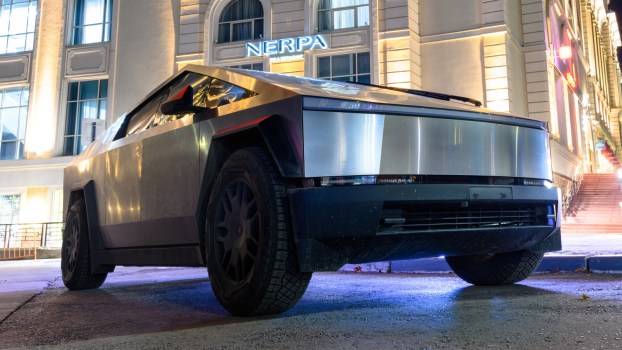
Of course, the EV pickup competition makes $20k or even $30k seem like a dream. The Rivian R1T starts at $71k. Otherwise, U.S. drivers have the Ford F-150 Lightning, Tesla Cybertruck (which is already on its deathbed), Chevrolet Silverado EV, GMC Sierra EV, GMC Hummer EV, and Ram 1500 REV. All are much larger and price out most of us, anyway.
Still, the U.S. already has EVs on the market in the $30k to $40k range, and they’re more capable, comfortable, and arguably safer. Upcoming IIHS and NHTSA ratings will confirm, of course.
Slate says that it’s engineering the Bank Slate in Troy, Michigan, and also manufacturing it in the Midwest
If you think this means Slate will be able to keep costs low because it’s dodging the Trump administration’s tariffs, think again.
The tariffs also place a surcharge on imported automotive parts. EV production – regardless of the end-delivery location – relies heavily on the global supply chain.
Case in point: Tesla sent a formal letter to the Trump administration this year explaining how the tariffs would debilitate production and likely stifle the EV maker from maintaining profitability.
The more expensive key EV components cost to import, the more drivers ultimately pay. And they’ll see increases in areas outside just the retail price of a new car. Experts predict that the auto tariffs will creep into lifetime insurance, maintenance, and repair costs, too.
This in a time when Americans were already showing disinterest in purchasing new cars as frequently as they used to. The average age of a passenger vehicle on U.S. roads is more than 12 years. This is older than any time previously recorded…going decades back.
So if buyers go to build their Blank Slate and land at, say, $36,000 or more, I’m not sure a ton of folks will pull the trigger considering the range. After all, the Ford Maverick Hybrid starts at $27k.
Is there a path to “more” without shutting most buyers out?
Listen, I’m a car person. I think the Blank Slate and its customizations are totally cool. I’d giddily drive it and be completely geeked. Truly, I think most everything on the market (or incoming) is super interesting, even if I’m not going to own it.
Ah! There we have it…isn’t that exactly my point, here? Who’s going to buy a “cheap” EV if this is what you get? A few of us will nab one and love it, sure. But it could easily land in a niche group of enthusiasts or brand fans. Dare I mention the Cybertruck, the concept most of us thought was doomed at launch?
Slate could face the same results…for the complete opposite reasons. It might be too small, too buildable, and too unsafe for most U.S. drivers. And so, then, here comes another option that’ll launch into market at great speedy speed and great spendy spend and…well…let’s see what happens.
Looking at the realities of today’s global automotive ecosystem, though, and considering what Americans really need, which are truly affordable, capable, convenient, safe vehicles, like Alef’s flying car concept, the Blank Slate seems like more of a “neat” toy for an upper-middle-class household to kick around town like it’s a high-end golf cart. The overall narrative here doesn’t quite land at “affordable EV for the people.” I hope I’m wrong, because I’m not sure how else we’ll get there.