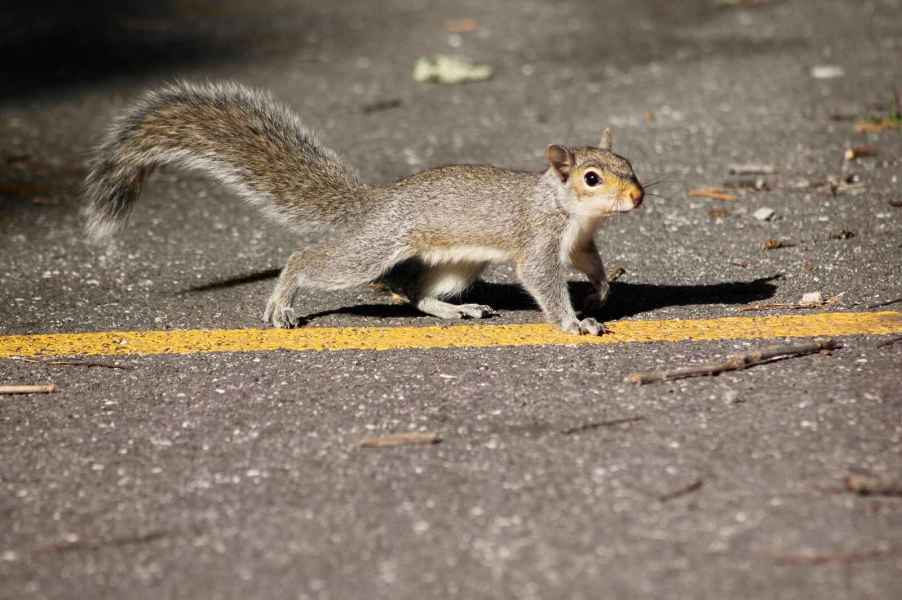
Biologist explains why squirrels zig-zag in front of cars, especially in the fall
If you live in an area with woodland critters, surely you’ve driven down the road and approached a squirrel crossing in front of your car. The squirrel can never seem to make up its mind about which way it wants to go, right? Instead, it bounces back and forth, changing directions several times before hurtling toward the curb…sometimes, unfortunately, right under a passing vehicle.
Why do squirrels perform wild “fake-outs” in front of cars?
Thaddeus McRae is a biologist and squirrel researcher (who even knew that was a career choice?) at Lee University in Cleveland, Tennessee. He told HowStuffWorks that this squiggly herky-jerky is a natural behavior with a specific cause-effect.
“The zig-zag run does seem to function as a way to throw off hawks swooping in for a meal,” McRae explains.
When a predatory bird flies overhead, squirrels do the ol’ this-a-way, that-a-way to confuse their stalkers or even dodge a fatal feathered swoop.
What’s more, motorists might notice that manic squirrel crossings ramp up in the fall. As they prep for winter, squirrels take on a more active feeding schedule and move around quite a bit looking for vittles.
To add to the mania, many younger (and therefore less experienced) squirrels are nesting independently for the first time in their lives. Since they’re still figuring the world out, they probably have poor timing when it comes to crossing the road.
In any case, since cars have only been around for a little over 100 years, squirrels just use the same “timeless” strategy on approaching vehicles.
Unfortunately for them, it’s extremely ineffective.
If you come across a dancing squirrel, it’s best to just stop (if it’s safe to) and wait for the little critter to pick a direction. They’ll choose a path in mere seconds and make their way to safety.