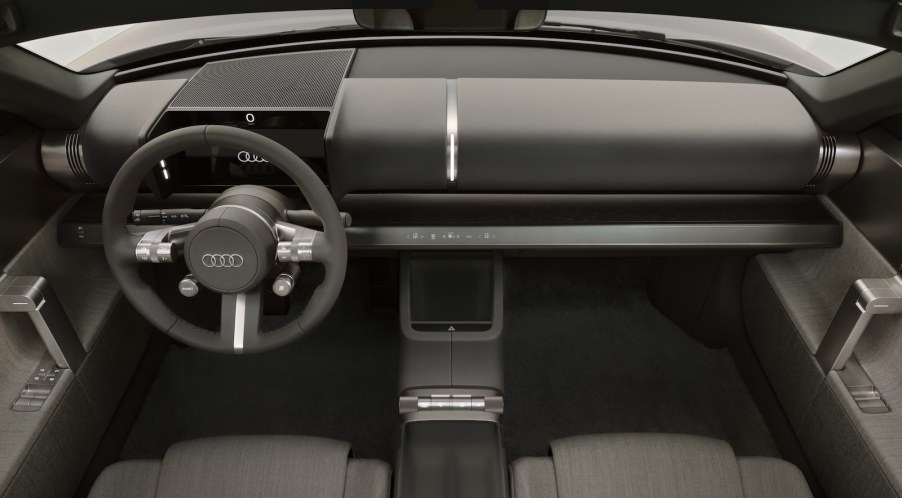
Audi Is Bringing Physical Buttons Back
Something intriguing is going on in the automotive world. Automakers would like to replace expensive physical buttons with cheaper touchscreens. Companies—such as General Motors, which are confident in their market share—are taking extreme measures, such as deleting Apple CarPlay, in hopes of charging owners subscription fees for their own software.
Smaller brands, meanwhile, are seeing a way to differentiate themselves. The trend makes it clear just how much consumers still want physical controls.
For example, the CEO of Alfa Romeo recently made headlines by rejecting the screen-first approach outright. “I don’t sell an iPad with a car around it, I sell an Alfa Romeo,” said Jean-Philippe Imparato, Alfa Romeo’s CEO, adding that future models will have “as few screens as possible.” On the other end of the spectrum, Bugatti famously refused to put an infotainment screen in its Chiron and will only feature a pop-up screen for its legally-required backup camera in the upcoming Tourbillon.
Audi joins the analog movement
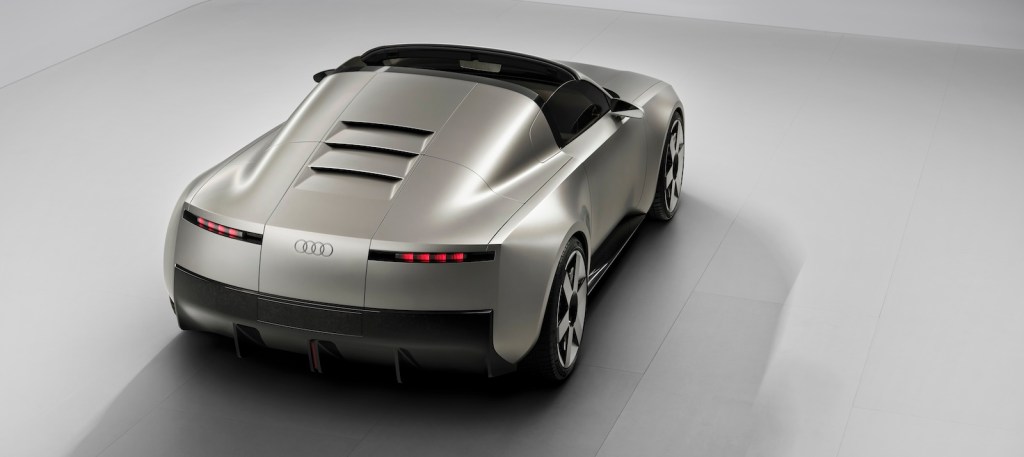
It’s no surprise, then, that Audi—despite recently bragging about some of the largest entertainment screens in the industry with its latest Q5 crossover—has seen the error of its ways. The automaker’s new design leadership is now looking to plant a flag with tactile, driver-focused controls. Translation: Audi is bringing the buttons back.
The German automaker made its intentions clear with its recent Concept C show car. Forgive the less-than-creative model name, because the interior is gorgeous. “Manufactured from anodized aluminum, physical controls provide a tactile experience that reflects mechanical quality – through their appearance, feel, and the unmistakable ‘Audi click.'” The car features a clean, minimalist dashboard, a recessed driver display, and a folding infotainment display. The result is simply swoon-worthy. Bravo, Audi.
So imagine my joy when the automaker promised these concept features would make it into production vehicles. That promise comes directly from Massimo Frascella, Audi’s chief creative officer, who has been outspoken about the industry’s obsession with oversized displays. “Big screens are not the best experience,” Frascella told Top Gear. “It’s technology for the sake of technology. For us, technology is there when you need it, not there when not needed.” He added that “tactility is very important,” signaling a return to physical buttons, switches, and materials that feel premium—not just futuristic.
Great. Audi is finally putting its money where its concept car’s mouth is. The automaker recently hired Frascella, whose résumé includes the Range Rover Velar, the modern Land Rover Defender, and the latest Range Rover lineup. His challenge is clear: differentiate Audi from BMW and Mercedes with confident, quiet, driver-focused cars.
And I’m here for it.