American Bantam Built and Delivered the 1st Jeep Prototype in Just 49 Days
American Bantam Car Company was a small automaker in Butler, Pennsylvania, working mostly in the margins of the larger industry. But war pressure mounted in 1940 and the U.S. military rushed to modernize. As many domestic companies have proved over and over, sometimes all you really need is a critical need and a belief that, yes, you can engineer something that hasn’t existed yet.
In this case, we’re talking about the very first Jeep.
The Army’s Quartermaster Corps sent out urgent requests to 135 different car companies
The task: to design a light reconnaissance vehicle that could move confidently over rough terrain, carry gear and troops, and survive the kind of abuse military life brings. Very few raised their hands. American Bantam was only one of three responders.
Military historian John Adams-Graf explained that American Bantam “can literally be credited as being the ‘father of the Jeep.’”
According to Forbes, he added that the company responded first to the U.S. Army Quartermaster Corps’ call for a light reconnaissance and utility vehicle.
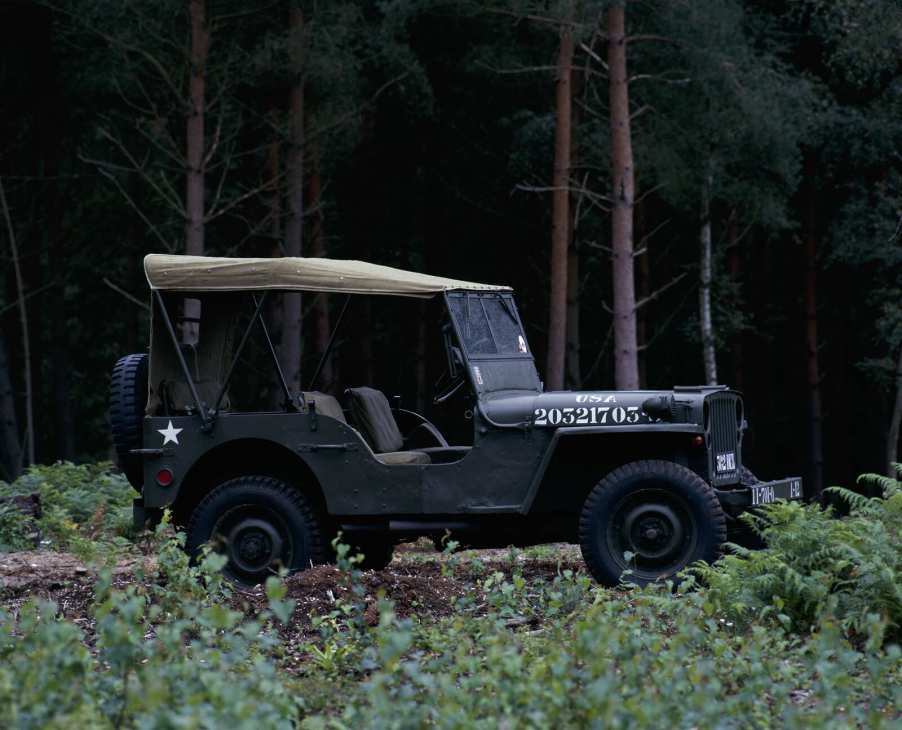
Bentham quickly came up with a prototype, then rushed to build and deliver it to Camp Holabaird in Maryland. It got the job done in just 49 days.
Only Ford and Willys delivered prototypes alongside Bantam.
Bantam hit the deadline and earned the first contract
The timeline is key, here. America hadn’t officially entered World War II yet. The Army was watching the European conflict closely and trying to fill gaps in mobility that older trucks and motorcycles couldn’t cover.
Bantam’s Jeep prototype didn’t come out of a fully staffed engineering department, either. The company borrowed its main designer, Karl Probst, on short notice.
He didn’t just draw up the plans. Probst drove the completed model himself to Camp Holabird to make the Army deadline.
Where Bantam fell short was scale
The company simply couldn’t build large numbers of vehicles. The Army recognized that and turned to the larger players. Both Willys-Overland and Ford ended up refining the design. Willys became the primary manufacturer.
Ford built them too, often using shared parts and standardized specs to ensure they could be deployed across different regions without repair chaos.
But the bones of that first Jeep…the stance, the capability, the posture that said “point me toward the problem”…all belonged to Bantam.
American Bantam still manufactured some of the early production Jeep vehicles and later built trailers for the military.
But Willys stamped its name into the grille. Ford followed with its GPW models
Willys-Overland was awarded the patent for the Jeep design, and after the war, the company used that momentum to introduce civilian versions.
The CJ-2A became the first consumer Jeep model in 1945. Farmers, contractors, and rural owners figured out quickly that if the vehicle could handle farm roads, artillery trails, and beaches under blackout conditions, it could handle hauling feed, equipment, and anything else a peace-era life required.
By the late 1940s, Jeep shifted from battlefield tool to American lifestyle machine. Willys promoted it as a universal vehicle (hence the “U” in utility) and leaned into everyday use.
Eventually, of course, Americans turned it from a work tool to a rec vehicle.
Decades later, Jeep became a car brand in its own right
Ownership passed through Kaiser, AMC, then Chrysler, and ultimately to Stellantis.
The modern Wrangler still carries that upright geometry and ladder-frame toughness drawn directly from Bantam’s 1940 whirlwind.
The significance of Bantam’s role with Jeep resurfaced recently after a fire destroyed the last major building tied to that milestone in Butler. As reported in Forbes, local advocates spoke about the loss as more than structural. It represented ingenuity under pressure.
American Bantam didn’t get the legacy it probably deserved. But its speed, engineering creativity, and willingness to commit resources set the foundation.
The Jeep became an American icon because a small company with limited resources decided that 49 days was enough time to build something entirely new. History proved it right.