7 signs that an automaker hates it when you skimp on trim level
Every automaker has to juggle two things at once: making their cars affordable for entry-level buyers and nudging customers toward pricier trims. That tension shows up in little design choices, and drivers notice. The truth is, it’s not always malicious. Building three different dashboards for three trims isn’t practical. But from the driver’s seat, these reminders can feel like the company is poking you in the ribs for saving money.
A Redditor recently posed the question, “What car most visibly says, ‘You didn’t buy the higher trim’?” Here are some of the clearest signs that you left features on the table when you chose a lower trim.
1. Blank panels and placeholders
Instead of retooling an entire dashboard for each trim, automakers often keep the same structure and simply cover up missing features.
Reddit users pointed to the recent Audi A5 and A6 e-Trons that leave a glossy black panel where the passenger-side screen would go. Porsche owners notice rows of blank buttons where active features could live.
It’s efficient for the factory, but it makes the cabin feel like a museum of “what you didn’t get.”
2. Basic bumpers and bodywork
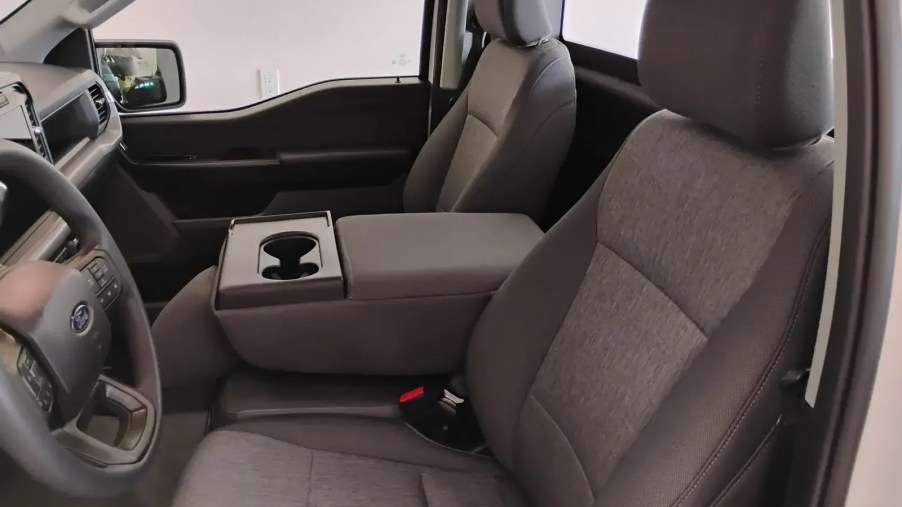
Entry-level pickups are famous for their black plastic bumpers and steel wheels. One driver pointed out the Ford F-150 XL, which still uses those cues even while starting in the $30,000s. $30k is “cheap” for a pickup these days, though.
The strategy is simple: make the work truck durable and affordable, while leaving the shiny trim and chrome accents for higher-paying customers.
3. Old-school hardware
Rear drum brakes still pop up on lower trims, even though discs have become the norm.
Case in point: Toyota’s Tacoma only switched to rear discs in 2024. It’s a way to cut costs and keep the base price attractive, but it also signals you’re not in the premium tier.
4. Smaller screens with big bezels
Screens are expensive, so base trims sometimes get smaller displays set inside the same housing as the premium versions. That can look awkward.
Some Mercedes A-Class models in the UK use two tiny five-inch screens surrounded by a giant bezel, while Subarus fit two small displays into one large slab of plastic.
It’s a practical move that avoids redesigning the dash, but it leaves owners wishing for the cleaner high-trim look.
5. Luxury that doesn’t feel so luxurious
German brands are especially good at reserving “wow” features for the higher trims.
A base Audi or BMW can sometimes feel less equipped than a well-optioned Volkswagen.
It makes sense for the business (they need reasons for customers to climb the ladder) but it also means the entry-level badge buyer can end up with a car that feels oddly plain.
6. Design cues that look unfinished
Little details can give away what trim you didn’t buy.
Some bumpers have cutouts shaped for dual exhausts, but the lower trims only get a single pipe. Some steering wheels lose button controls altogether, like on the Audi Q2.
These quirks keep the parts catalog simpler, but they leave base models looking half-dressed.
7. Visual overlap with mainstream cars
Even exotic brands play this game. One driver noted that a base Lamborghini Urus can blend into traffic and could be mistaken for a Buick SUV.
Automakers count on upgrades like larger wheels, aggressive trim, and flashier paint to make premium buyers stand apart.
Automakers really don’t design base trims to shame you
They design them to keep prices low, parts common, and production simple. But when you notice blank buttons, smaller screens, or black bumpers, you’re also noticing the quiet nudge toward the higher trim.
That’s the balance every brand has to strike: practical for the factory, profitable for the company, and just tempting enough for you to wonder if the next trim up was worth it.