25 Cars That Hold Their Value Best After 5 Years
When you’re looking at new cars to bring home, horsepower, reliability, infotainment screens, and monthly payments matter. Five years later, though, what might matter most is whether the car is even worth anything.
A recent iSeeCars analysis puts real numbers on that moment of truth. Some cars quietly protect your wallet. Others torch it.
iSeeCars looked at more than 800,000 five-year-old used cars sold between March 2024 and February 2025. It measured how much value cars lose after five years and compared results across segments, brands, and nameplates.
The results show a market settling back into reality after the pandemic price surge, but not evenly.
Across all cars, the average five-year depreciation hit 45.6% in 2025
That’s worse than 2023, when supply shortages propped up used values. Still better than the 2019 norm, though
In any case, every segment lost more value than it did two years ago. Hybrids came closest to holding their ground. EVs slid the most, an average of 58.8% of their value. Hybrids drop about 40.7%. Trucks come in close at 40.4%. SUVs fall just under 49%.
Then there’s the bright side:
The 25 cars that hold their value best are a mix of dream cars and sensible favorites
At the top sit the Porsche 911 and 718 Cayman.
After five years, the 911 loses just 19.5% of its value. That’s rare air in any market. The 718 Cayman follows closely at 21.8%. Limited supply, loyal buyers, and strong performance reputations keep demand steady.
Toyota shows up everywhere
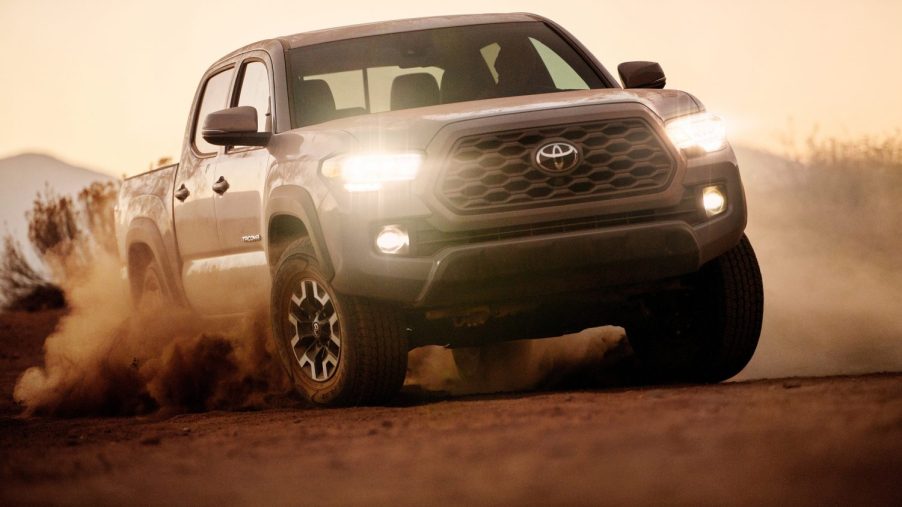
The Tacoma ranks third overall at 26% depreciation, followed by the Tundra, 4Runner, RAV4 including the hybrid, Corolla in sedan and hatchback form, Prius, and Camry.
Honda mirrors that consistency with the Civic, Accord, CR-V, and HR-V all making the list.
Subaru lands multiple spots with the BRZ, Crosstrek, Impreza, and WRX.
Sports cars punch above their weight here
Chevrolet Corvette appears twice due to different trims and pricing bands. The Camaro, Mustang, and Subaru BRZ also perform well. These cars benefit from enthusiast demand and fewer direct substitutes.
Trucks and small SUVs dominate the middle of the rankings
The Jeep Wrangler, Ford Ranger, and Toyota Tacoma all retain value because buyers trust them to work hard, age slowly, and remain popular.
Here’s the full chart:
25 Cars That Hold Their Value Best After 5 Years
| Rank | Model | Segment | Average 5-Year Depreciation | Average $ Difference from MSRP |
| 1 | Porsche 911 | Sports Car | 19.5% | $24,428 |
| 2 | Porsche 718 Cayman | Sports Car | 21.8% | $15,851 |
| 3 | Toyota Tacoma | Truck | 26.0% | $8,217 |
| 4 | Chevrolet Corvette | Coupe | 27.2% | $18,557 |
| 5 | Honda Civic | Sedan/Hatchback | 28.0% | $6,987 |
| 6 | Chevrolet Camaro | Sports Car | 28.0% | $8,653 |
| 7 | Toyota Tundra | Truck | 29.1% | $11,659 |
| 8 | Ford Mustang | Sports Car | 29.2% | $9,325 |
| 9 | Porsche 718 Boxster | Sports Car | 29.6% | $22,155 |
| 10 | Toyota Corolla Hatchback | Hatchback | 30.1% | $7,156 |
| 11 | Subaru BRZ | Sports Car | 30.2% | $9,424 |
| 12 | Toyota RAV4/RAV4 Hybrid | SUV/Hybrid | 30.9% | $9,233 |
| 13 | Toyota 4Runner | SUV | 31.3% | $12,753 |
| 14 | Toyota Corolla | Sedan | 31.4% | $7,004 |
| 15 | Subaru Crosstrek | SUV | 33.0% | $8,511 |
| 16 | Subaru Impreza | Wagon | 33.4% | $7,889 |
| 17 | Chevrolet Corvette | Sports Car | 33.7% | $25,343 |
| 18 | Jeep Wrangler | SUV | 33.9% | $10,888 |
| 19 | Honda HR-V | SUV | 34.0% | $8,640 |
| 20 | Ford Ranger | Truck | 34.7% | $11,472 |
| 21 | Honda Accord | Sedan | 34.9% | $9,879 |
| 22 | Toyota Prius | Hybrid | 34.9% | $9,908 |
| 23 | Honda CR-V | SUV | 35.2% | $10,602 |
| 24 | Subaru WRX | Sedan | 35.5% | $12,702 |
| 25 | Toyota Camry | Sedan | 35.5% | $9,388 |
| Overall Average | 45.6% | $17,395 | ||
The cars that fare worst tell the other half of the story
Luxury sedans and EVs dominate the biggest depreciation list. Models like the Jaguar I-PACE, BMW 7 Series, Tesla Model S, and Nissan LEAF lose value fast as tech changes, market shifts, and incentives reset new sales.
iSeeCars executive analyst Karl Brauer explained that depreciation remains the biggest cost of buying new
The spread between segments can mean tens of thousands of dollars over five years. The return of normal production after COVID shutdowns is a big reason values are falling again.
The data doesn’t say which cars you should love
It shows what holds steady when the new car smell fades. In a calmer market, boring reliability and clear demand tend to beat novelty every time.