15 Critical Things You Absolutely Must Check Before Buying a Used Dodge Challenger
Most people don’t just wake up one day and set out to buy a Dodge Challenger. They talk themselves into it.
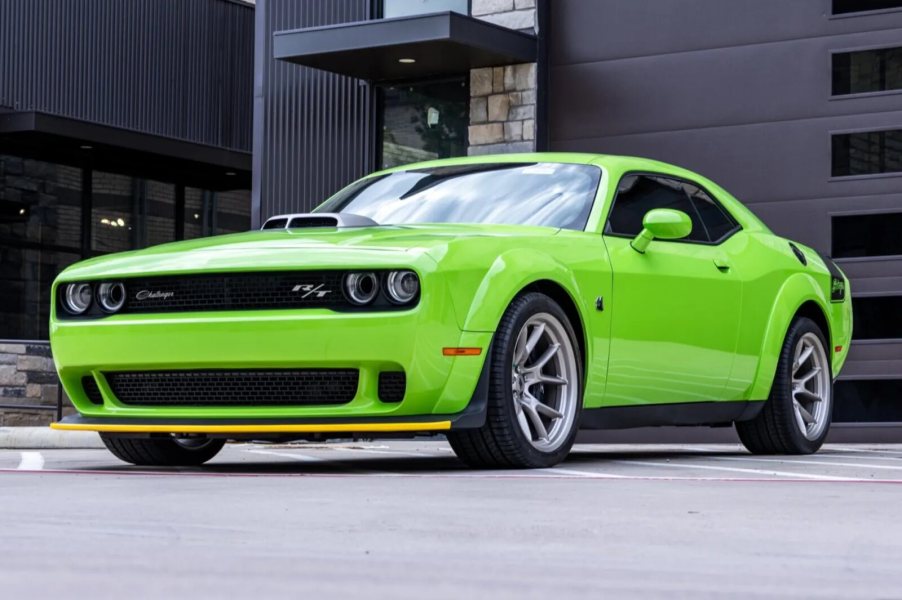
The first time you see one parked at the curb, low and broad-shouldered like it’s shrugging off the decades between now and 1970, something happens.
It’s emotional. A Challenger feels like a commitment to driving for the sake of it. And what egg-shaped monotone crossover gives you that these days?
That said, this is still a large, heavy performance coupe with varying reliability scores depending on year and configuration. Some versions scored lower than average in long-term dependability, and crash statistics from both IIHS and NHTSA remind us that driver behavior heavily influences outcomes.
Before you follow your heart, here are the key checks you need to make.
15 Things You Absolutely Must Check Before Buying a Used Dodge Challenger
1. Cooling system components (2008 to 2015)
Several owners reported water pump failures around 60k to 125k miles, particularly on earlier RTs. A few shared that fan blades on 2008 to 2012 models came apart mid-drive. Inspect radiator, pump, hoses, and look for dried coolant around the fan housing. If there’s any indication of overheating, walk away.
2. Front suspension wear (all generations over 60k miles)
Bushings and ball joints commonly degrade. On rough-road states like New York, this shows up earlier. Have your pre-purchase inspector test for clunks and steering looseness. These parts aren’t catastrophic but they add up if neglected.
3. Driveshaft carrier bearing (around 100k Miles)
Multiple owners said the carrier bearing bushing tore, and replacement can run over $1,000 with long dealer wait times. Inspect for vibration under acceleration or knocking from underneath.
4. Transmission and gear engagement (2015 to 2019 more frequently)
Reports of rough shifting are common. Hesitation, hard gear changes or surge may indicate deeper issues. Verify a fluid change was done around 60k miles. Skip any car with questionable maintenance history here.
5. Electrical glitches: TIPM and charging system (2010 to 2014)
Check for random window behavior, lights flashing, or past battery drain. A failing Totally Integrated Power Module (TIPM…we call it a “Tip-Em”) is notorious. Ask about alternator recalls; one person shared theirs was replaced under warranty.
6. Engine noise check (V8 models)
Cold start is your moment. An initial rattle is typical Hemi personality. Persistent ticking could suggest exhaust manifold bolt failure or, in worse cases, cam and lifter wear. Repairs escalate quickly if ignored.
7. Body, panel fit, and undercarriage
Several people warned about wrecked Challengers slipping into the used market unreported. Look for uneven panel gaps, repaint overspray, and bent chassis points under the hood and body. If it looks like it spent time sideways, it probably did.
8. Confirm mileage vs. hours driven
Using the digital dash (EVIC), divide miles by engine hours. One person explained anything under 45 mph indicates lots of idling or stop-and-go miles. In-town driving is hard on Challenger components.
9. Check steering rack and power assist
Low-speed groaning or hissing usually means the steering system needs attention. It’s not major but bothersome on older models without service records.
10. Verify recall history and airbag status
Takata airbags affected some years. Confirm replacements were completed. Avoid any Challenger with active airbag warning lights.
11. Exhaust manifold and rust (2011 to 2014 more often)
One owner noted slight rust beginning around 130k miles. Check wheel wells, rear quarters, and seals. Any sign of rot early on is a red flag. Also listen for exhaust tone change during warm-up.
12. Tire brand, condition, and size
Multiple replies emphasized matched, name-brand tires. On widebody models, at least 305 width. On narrow-body, 275. Poor tires usually predict poor ownership accountability.
13. Fuel filler neck and gas tank flow (2010 to 2016)
Difficulty filling the tank is a known issue. Ask during the test drive. If the pump cuts off repeatedly, expect corrective work.
14. Climate control functionality
Inconsistent AC or heat that toggles on its own is common. Check on the test drive while accelerating, idling, and parked.
15. Ownership history and location
Someone warned against Challengers from high street-takeover areas. Ideally, single-owner, older driver. Service records are everything.
A Challenger can be a surprisingly durable partner when cared for
There are owners with over 200k miles who never touched internal engine or transmission components.
Just don’t let the car’s swagger blind you to what hides underneath. Get a pre-purchase inspection, walk away from mystery, and reward the ones that have clearly been loved, not abused.
Follow your heart…but know you might end up in a close relationship with your mechanic.