10 Facts About GM That Sound Made Up But Are 100% True
By the time most Americans thought of cars as essential to daily life, General Motors was already deciding how they’d be sold, serviced, and replaced. The company was founded in 1908 in Flint, Michigan, by William C. Durant, a fast-talking carriage magnate who believed the future belonged to “consolidation.” Durant stitched together Buick, Oldsmobile, Cadillac, and a growing list of suppliers into what quickly became the largest automaker in the world.
By the 1920s, GM wasn’t just building cars. It was shaping how Americans shopped for them, paid for them, drove them, and even thought about national mobility. It expanded quickly, aggressively, and at a scale that still feels hard to wrap our heads around today.
That long reach explains why so many true stories about GM sound exaggerated, implausible, or slightly unhinged.
10 Things About GM That Sound Made Up But Are 100% True
General Motors has been part of American life for more than a century, which means some parts of its history make for excellent trivia night tidbits. Let’s dive in:
GM once sold refrigerators
In the 1910s and 1920s, GM bought a company called Frigidaire (sounds familiar, right?) and turned it into a household name.
For decades, GM was as comfortable selling iceboxes as it was sedans. The logic aligned: mass production, distribution, and consumer financing worked just as well for kitchens as driveways.
GM eventually spun Frigidaire off, but for years, the same corporation that built Chevrolets also helped keep leftovers cold.
The automatic transmission was a GM flex
Drivers take automatics for granted today, but GM was the company that made them mainstream.
In 1939, it introduced the Hydra-Matic, the first mass-produced fully automatic transmission. Cadillac and Oldsmobile rolled it out first, and the idea spread fast. By the early 1950s, even Rolls-Royce was licensing GM’s technology. Manual loyalists may scoff, but traffic jams owe GM a thank-you note.
GM helped build the modern war machine
During World War II, GM stopped building cars for civilians and went all-in on military production. The company built tanks, aircraft engines, trucks, and weapons at an industrial scale the U.S. had never seen.
The War Production Board credited GM with producing more than $12 billion worth of wartime equipment. That experience reshaped how American manufacturing worked long after the war ended.
The company was legally convicted over streetcars
In 1949, GM, along with several partners, was convicted in federal court of antitrust violations related to National City Lines. That company bought and dismantled streetcar systems in multiple U.S. cities. GM was an investor and strategic partner.
National City Lines purchased lots of GM buses, engines, and parts.
The court found that GM and others conspired to monopolize bus sales, not transit itself. The fines were small, but the case is real, documented, and still debated in transportation policy circles.
GM created the modern car loan industry
Buying a car on credit feels normal now. It was not normal in 1919. That’s when GM created General Motors Acceptance Corporation, later known as GMAC.
The idea was to let middle-class buyers pay monthly instead of upfront. This changed who could own a car and how often Americans replaced them.
GMAC later became Ally Financial, which still operates today as a major auto and consumer lender.
The EV1 existed, worked, and was taken back
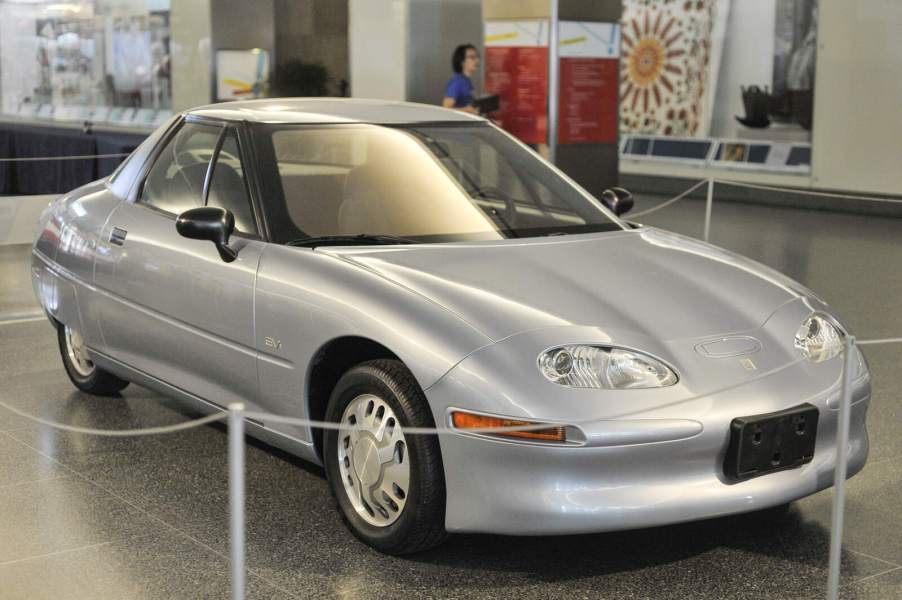
In the 1990s, GM built the EV1, a fully electric car offered in California and Arizona.
Drivers actually loved it. Range was limited, but reliability was strong, and operating costs were low. After just three productions years, GM ended the program after the 1999 model, reclaimed most of the cars, and scrapped them.
The decision sparked protests, lawsuits, and a documentary. GM said the business case didn’t work at the time. Both things can be true, as many would say the same about EVs now. Drivers who can afford them may love them, but the Detroit Three is having a hard time justifying the build costs versus sales profit.
GM ran a secret desert test city
If you’ve ever wondered where automakers beat the daylights out of prototypes, GM has an answer.
Its Desert Proving Ground in Arizona spanned thousands of acres and includes fake towns, highways, rail crossings, and torture-test tracks. Cars got slammed, baked, frozen, and shaken there long before customers saw them.
GM operated the facility from the 1950s until 2009. Reportedly, it moved its testing grounds to government property, but rumors murmur that those have been shuttered, too.
A GM defect reshaped auto safety law
An ignition switch failure tied to GM vehicles in the early 2000s led to crashes, injuries, and deaths before the issue was publicly acknowledged. The Chevrolet Cobalt, Saturn Ion, and several related models had the defective switch.
The switch could rotate out of the “run” position while driving, often after hitting a bump or if the keychain was heavy. When that happened, the engine could shut off.
When the engine shut off, power steering and power brakes were reduced, and airbags were disabled because the electrical system thought the car was no longer running. In crashes that followed, airbags sometimes failed to deploy.
Reportedly, GM engineers identified the underlying issue years earlier and even changed the switch design quietly in production. But the problem wasn’t escalated or clearly tracked as a safety defect. Cars already on the road were left with the original part. That internal breakdown in reporting and decision-making became a major part of later investigations.
Federal investigators later found internal failures in reporting and escalation. GM recalled millions of vehicles and paid settlements and fines. The episode changed how defects are reported to regulators and how automakers document safety decisions.
OnStar can slow down stolen cars
GM’s OnStar system can work with police to remotely slow a stolen vehicle, reducing engine power until it safely comes to a stop.
Law enforcement agencies across the U.S. have confirmed using the system during active theft cases. It’s one of the few times software actually helps end a chase instead of starting one.
GM went bankrupt and survived
In 2009, right after I graduated from The Ohio State University with a humble English degree, GM filed for Chapter 11 bankruptcy.
During the financial crisis, the U.S. government stepped in with emergency funding, arguing that GM’s collapse would devastate jobs and suppliers nationwide. A restructured GM emerged weeks later, smaller and leaner. The government eventually sold its stake. Few companies of that size get a second act, but GM did.
Some of our Facebook fans still refer to the bailout when we post current GM headlines. It was a traumatic time for many Americans, that’s undeniable. Certain readers still begrudge the action, but what’s done is done.
GM’s history is messy, impressive, and occasionally uncomfortable
But it’s all real, documented, and still shaping how Americans drive, buy, and think about cars today.