Trump’s Big, Beautiful Bill will make electric vehicles much, much more expensive
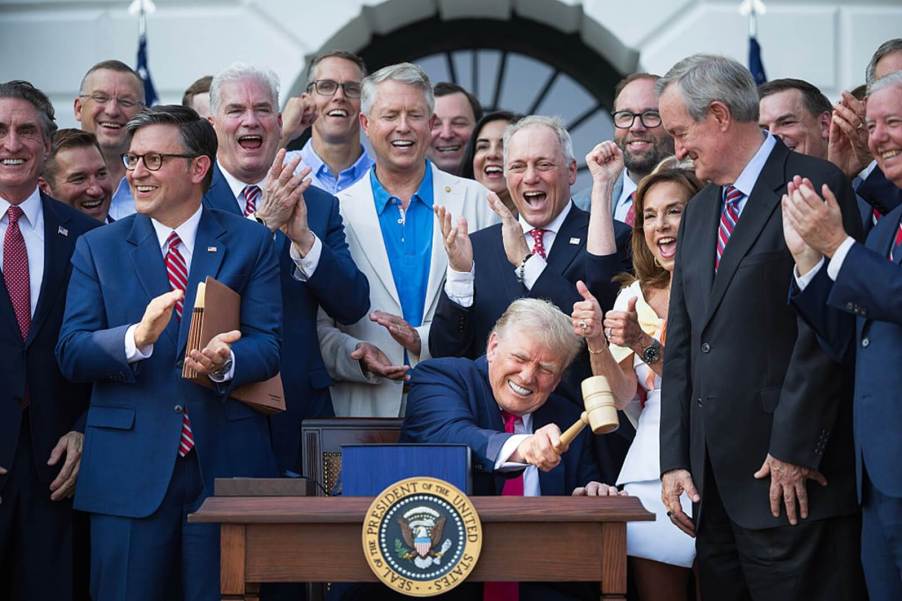
The Trump Administration’s “Big, Beautiful Bill” has a few things in its sights. For starters, the bill seeks to nix the federal tax credit for electric vehicles, from Teslas to Fords, Chevrolets, and Volkswagens. The move will make new and used EVs significantly more expensive.
President Donald Trump’s “Big, Beautiful Bill” is set to scrap the $7,500 electric vehicle tax credit, making EVs much pricier
As it stands now, the federal tax credit offers up to $7,500 for the purchase of new, qualifying EVs. Credits up to $4,000 are also available for “eligible used electric vehicles,” per the US Department of Energy. That incentive served to help EV adoption along, despite the higher average prices and depreciation in the segment.
As for the new EV purchases, qualifying vehicles must meet the Internal Revenue Service’s criteria. For example, qualifying vehicles must have an MSRP under $55,000 for cars and $80,000 for SUVs and trucks. In addition to vehicle qualifications, incentive seekers can’t earn more than $300,000 as a household or $225,000 as the head of a household. Now, however, the hefty incentive is on the chopping block entirely.
September is set to spell the end of the tax credit
New and used electric vehicles are set to lose the Biden-era federal tax credit on September 30, 2025. So what does that mean for EV adopters? Put simply, buying a qualifying electric vehicle is about to get a whole lot more expensive.
What would normally shave a considerable amount off the initial purchase price of an EV will go up in smoke just before October. The average price of a new EV in 2025 is around $55,614. With that number in mind, the loss of the $7,500 credit could make the average electric vehicle about 13% more expensive. Ouch.
For instance, a 2025 Tesla Model 3 Long Range RWD starts at around $39,484 after estimated tax and fees, depending on factors like location. However, without that $7,500 federal tax incentive, the price of the brand’s most affordable electric vehicle creeps troublingly close to the $47,000 mark.
And the controversial head of Tesla, Elon Musk, has been one of the bill’s most outspoken critics. As a result, the Tesla CEO has proposed founding another political party, the so-called “America Party.” Trump has bashed the idea, calling it a “train wreck,” per Benzinga.