Why the ‘Detroit 3’ Chose Michigan
Detroit’s path to becoming America’s automotive headquarters didn’t happen because someone randomly planted a flag and declared it so. The city truly offered Ford, GM, and Chrysler (now Stellantis) the right ingredients at the right time, long before anyone imagined turbocharged family crossovers.
Detroit sat in a sweet spot for moving heavy material. It had factories built for serious work. And it had entrepreneurs who knew how to turn an idea into metal that moved.
Detroit’s location gave early car makers a major advantage
The Great Lakes connected the city to iron ore coming down from Minnesota, copper from Michigan’s Upper Peninsula, and timber from nearby forests.
Waterways delivered raw materials cheaply, which mattered when each early car felt like a rolling science experiment.
Railroads expanded those routes and helped finished vehicles reach Chicago, New York, and other growing markets. Detroit could ship parts in and cars out without wasting time.
The region already knew how to build things
Machine shops and foundries ran full tilt at the turn of the 20th century. Skilled labor was easy to find. Workers understood the rhythm of factory life.
When early automakers arrived, they didn’t need to invent an industrial culture. It was already there, humming along and ready for the next big product.
Innovation played an equally important role

Ransom E. Olds set up shop in the city and, in 1901, introduced the first moving assembly line for mass production. That year, out came 425 of the Oldsmobile Curved Dash, priced at a reasonable $650.
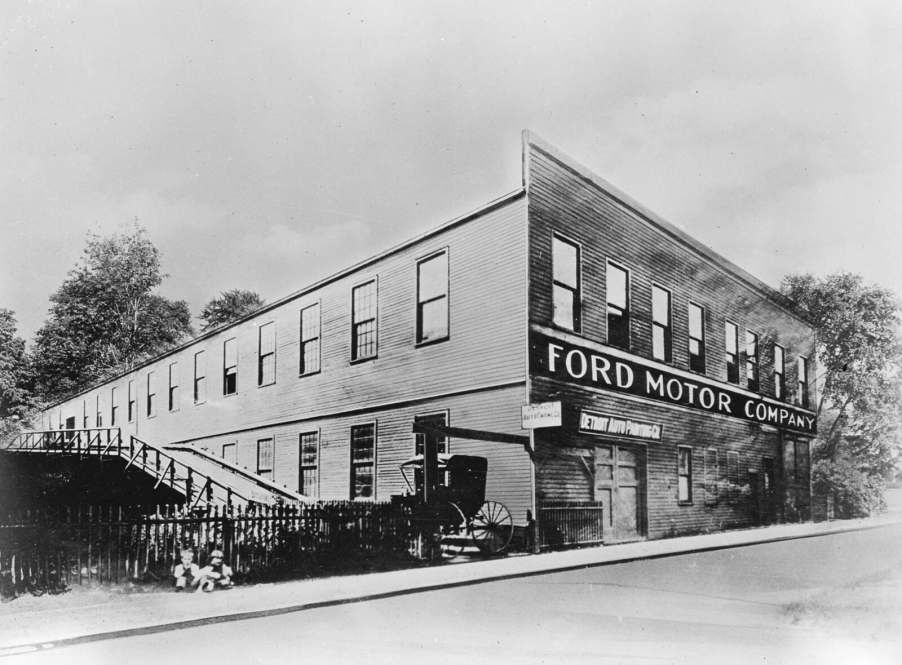
Henry Ford watched the efficiency gains and pushed them even further at Ford Motor Company.
Detroit became a place where ideas spread fast. Suppliers clustered around the manufacturers. Engineers talked across company lines. That kind of cross-pollination sped up everything from machining methods to early safety improvements.
Ford, General Motors, and Chrysler grew out of that environment
Ford shaped the nation’s early driving habits with the Model T and later built bestsellers like the F Series. The F-150 pickup remains one of the most popular cars in the world.
GM assembled a stable of brands and developed long-running hits such as the Chevrolet Suburban and Silverado.
Chrysler evolved through various owners but stayed rooted in the Detroit area throughout its corporate shifts. It became part of Fiat Chrysler Automobiles in 2014 and later folded into Stellantis in 2021. Despite the corporate reshuffling, the brands many drivers know (Chrysler, Dodge, Ram, and Jeep) remained tied to the region and its workforce.
Those carmakers didn’t just grow independently in Detroit
They reinforced one another. As they added factories and suppliers, the region’s capabilities expanded. More engineers and designers arrived. More supporting businesses followed. The cycle built on itself until Detroit became synonymous with building cars at scale.
Even today, the legacy of that early momentum shapes Michigan. Ford invests heavily in research and EV development in Dearborn. GM develops future electric platforms in Warren and Detroit. Stellantis maintains major engineering and manufacturing footprints across Metro Detroit.
Detroit offered a head start in the early days of the automobile. While the industry spread out across the country, it still hasn’t found a good enough reason to leave.