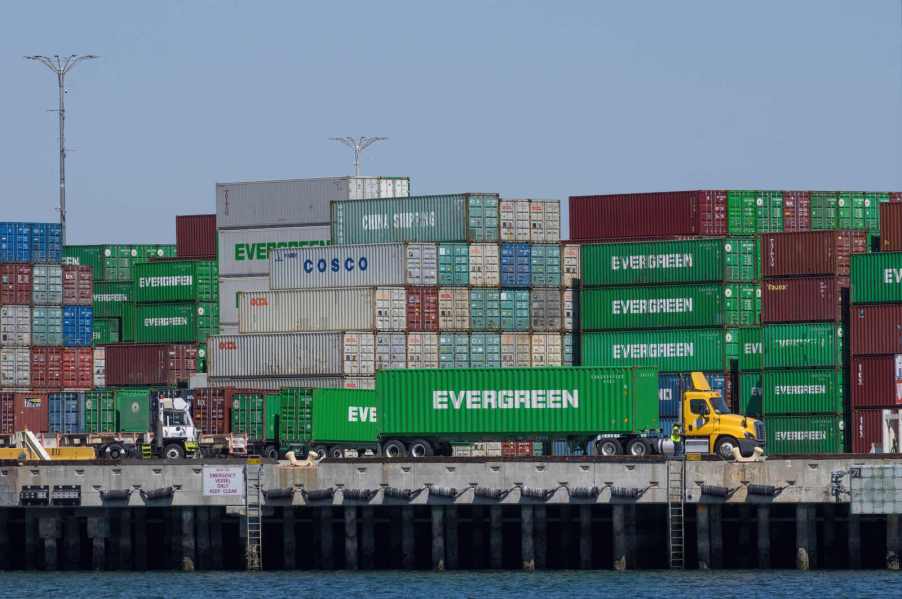
Trump dubbed April 2, 2025, “Liberation Day,” but U.S. truck drivers serve at the helm of the country’s economic health. As tariffs ripple through our supply chain, they’re warning Americans of impending product shortages. “From what I understand, this will be worse than the empty shelves we experienced during covid,” one remarked in r/Truckers.
The conversation started three days ago, when someone shared a Fortune article highlighting how empty the Port of Los Angeles is already looking. In turn, the truck drivers have less (and possibly very soon, nothing) to haul in their semi-trucks. The comments rolled in, confirming concern.
“Im a trucker that works out of the port of savannah, our company ceo said freight is non existent next month id switch companies but friends in other trucking roles are slowing down as well.”
One remarked shipments are currently down 30% year-over-year. Another added, “Almost certainly gonna be down even more week 19. Going through the list of scheduled arrivals for week 17 & 18, I noticed only two days with just one arrival: May 8th and 9th, the last two days of the week…”
But even Bloomberg estimates it’s getting much worse, fast: A 60% reduction in shipments over 2024.
It could get really, really bad starting next month
As the truck drivers’ thread stretches, the conversation doubles down on our tariff reality check: May.
“It’s going to get worse as it takes 30 days for ships to transport goods from China to LA. May 10th is approximately 30 days after the tariff war fiasco. NYC is 55 days or so. We will be seeing similar news starting about 25 days from now.”
So, it seems that the truck drivers predict chaos to strike early to mid-May.
“We are at the point in the tsunami where the water pulls away from the beach.”
“Widepread pain” might occur by the end of May: “That’s based on thinking imports get from ports to store shelves in less than a couple of weeks (“just in time” inventory policies). Some retailers may have beefed up inventories in advance of the tariffs but I doubt more than a couple weeks worth.”
If retailers don’t get their products, they can’t sell anything. If factories can’t get their supplies fulfilled, they can’t manufacture. In turn, anything produced in the U.S. already will be in high demand, driving up prices just as badly (if not worse) than the import tariffs’ 25%.
Since the country’s relied so long on foreign imports, we’re likely years away from building out domestic manufacturing to meet our own consumer and infrastructure needs.
When one Redditor asked truck drivers what they should go buy ASAP, the answer wasn’t altogether clear
This isn’t necessarily a meat and produce issue, because we do grow quite a bit of our own food. We’re entering farmer’s market season, too, so many of us have access to locally grown items, even. Still, U.S. agriculture is stressed already, citing low farmer profit and terribly high overhead. Export-dependent farmers will feel the real pain. For American consumers, Food & Water Watch predicts the tariffs could triple domestic food costs. But at least it’s stateside.
The big concern here involves most anything made overseas that American consumers need and U.S. production requires in its manufacturing processes that falls under the tariffs.
While we all know that Nike sneakers and foreign-built cars get the 25% surcharge, the White House also included imported pharmaceuticals, for instance. We can live without $200 sneakers. We can’t live without affordable life-saving drugs. It’s true that the U.S. produces the majority of American prescriptions…but relies on certain imported substances and materials to do so. Traditionally, the White House exempts them from tariffs. The Trump administration isn’t.
A top commenter confirmed: “My biggest concerns are medicine and prescriptions and you can’t really stock up on that. USA grows food, I think people will be able to get food. It’s other necessities that will catch people off guard. I could be wrong, I’m really unsure, myself.”
Higher overhead meets lower production, lowering or eliminating sales, leading to layoffs
Again, it’ll take years to build facilities to replace the imported goods that truck drivers move across the country from our ports. That’s if it even gets done before tariffs lift due to total backlash (from whatever whiplash we could all suffer here shortly). As such, consumers and the workforce alike could feel the shortages, ultimately in the form of joblessness…even if temporary.
What can we do?
Experts recommend staying aware and doing what you can to remain financially healthy, despite headlines. Budgeting and keeping expenses to essentials could be the key right now.
Investopedia shared a survey wherein about 50% of Americans are living paycheck to paycheck in 2025. Between Covid and inflation, many are still recovering, so the looming shortages could make things even more challenging. If you can help it, the VP of financial services at J.D. Power recommended not making any major purchases, like a car, right now. “Drive your car a little bit longer until things settle down.”
You can read the full truck drivers’ Reddit thread here: