3 things police can make you do during a traffic stop—without arresting you
You see the flashing police lights in your rearview mirror. Your heart sinks. Maybe you were speeding—or maybe it’s a taillight. But as you pull over, you’re not just handing over your license. The officer orders you out of the car, asks you to move it, or even reaches for the cuffs. You’re not being arrested—yet—but can the police do all this during a traffic stop? I’m here to break it down.
Hand over your license, registration, and insurance
When you’re stopped, the first thing police can ask for is your license, registration, and proof of insurance (in states that require it). What’s more, you’re legally required to provide these documents.
The Supreme Court decision in Delaware v. Prouse (1979) reinforced this authority. The Court ruled that checking a driver’s documentation serves public safety by ensuring that vehicles on the road are properly licensed and insured. “Document checks are a minimal intrusion on personal liberty,” the ruling stated.
Get out of your car–or stay inside

Police can also ask you to exit the vehicle or stay inside, depending on the situation. This authority stems from Pennsylvania v. Mimms (1977), which ruled that asking a driver to step out is a minor inconvenience compared to the need for officer safety.
The same logic applies if they ask you to move your car to a safer location. Officers are responsible for controlling the scene during a traffic stop to protect everyone involved.
For example, imagine being pulled over on a busy highway. The officer may ask you to move to the shoulder or a nearby parking lot. Even if it’s inconvenient, comply first and document any concerns later.
Can police handcuff you without arresting you?
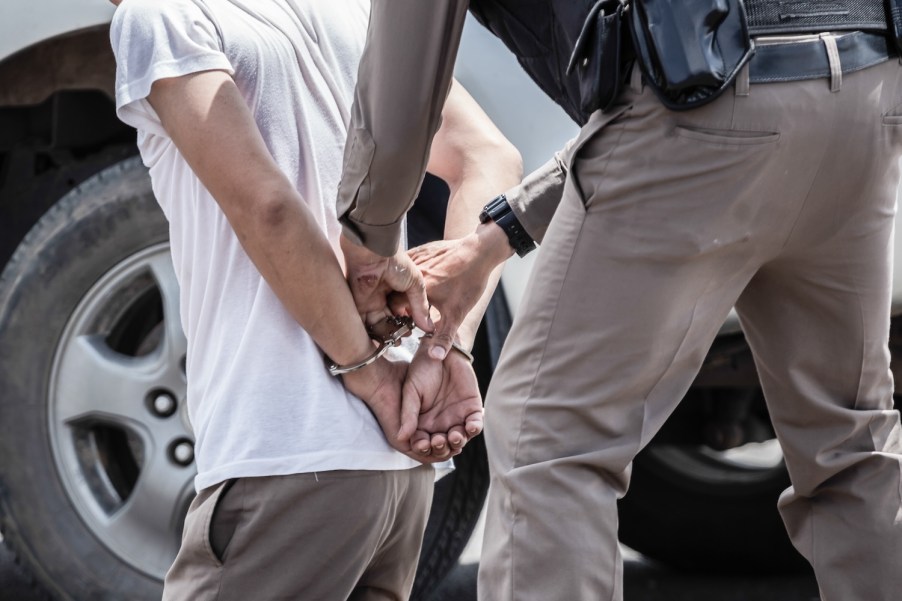
Yes. Police can handcuff you during a traffic stop without formally arresting you. This was upheld in Muehler v. Mena (2005), which allowed handcuffing when officers reasonably believe someone poses a threat.
Take Tyreek Hill’s recent traffic stop. Miami police handcuffed the NFL player after he refused their directions. Law enforcement coach Lawrence Hunter explained, “When someone is uncooperative, officers may handcuff them for safety—even during a temporary detention.”
However, handcuffing must be brief and justified. As the Court emphasized, “Handcuffing is reasonable if necessary for officer safety and the detention is not prolonged.”
What police can’t make you do during a traffic stop
While officers have wide-ranging authority, there are limits. Here’s what they can’t require:
- Answer questions: You do have to present license, registration, and insurance where applicable. You don’t have to explain where you’re going or coming from. You can, “Plead the 5th.”
- ID passengers: Unless they suspect your passengers of a crime, police can’t demand identification from them.
- Submit to roadside tests: Breathalyzers and sobriety tests are optional in almost every state–unless you’re under arrest or facing a warrant.
- Stay longer than necessary: Once the reason for the stop is resolved, you’re free to go. Just ask, “Am I free to leave?” then scoot.
To protect your rights, remember these key phrases:
- “I’d prefer not to answer.”
- “I’m invoking my Fifth Amendment right.”
- “I don’t consent to any searches or tests.”
Traffic stops don’t have to spiral
Traffic stops are stressful, but they don’t have to spiral. When you understand what police can do during a traffic stop, you can respond calmly and assertively. Remember, safety is the priority—for everyone involved. Comply now, and if something feels wrong, fight it later in court.