The “fake cop trick” isn’t just an urban legend
Perhaps you’ve heard this urban legend: a young woman is driving alone at night when an unmarked police car pulls in behind her, flashing its lights and sounding a siren. One popular chain email describers her as a 19-year-old college student named Lauren who keeps driving to a well-lit parking lot. Once there, she uses a phone number to contact a local police dispatcher, who confirms that the officer behind her is actually a criminal impersonator attempting to lure her in.
As far as fact-checkers can tell, the story in this email is fabricated. But according to Ranker, multiple criminals have impersonated police officers in real life. One infamous example is serial killer Ted Bundy. Others include serial kidnappers Henry Terry and Brian Keith Cobb Jr. Another, Robert Montoya, even set up a fake police car and pulled over a vehicle—only to realize he had stopped an undercover cop. So should you be concerned when you see lights in your rearview? Probably not.
First, driving a convincing “marked” police car without attracting real officers’ attention is extremely difficult. Police officers will stop a car that looks like a police vehicle—with “police” badges and lettering–right away. And as for unmarked “fake” police cars with hidden flashing lights but no other identification? Those are even rarer. Only two of the criminals listed above attempted to use one. Most were simply conmen who convinced people they met face-to-face that they were police officers.
Detroit Police Officer Frank Zielinski told AutoBlog, “The crime of impersonating an officer is rare. What we usually see is that when it happens in the suburbs, it tends to be somebody on a power trip. They might pull somebody over, act like a police officer, give the citizen a warning, and then send them on their way. In urban areas, the motivation is usually theft or potentially a carjacking.”
L.A. Police Officer Clarence Williams explained that these crimes are usually quick cons. The criminals aim to flee before real police arrive. “We have had complaints of officer impersonations during my years on the force. Normally, the criminal pulls over a citizen, quickly flashes a badge, and then commits some type of robbery—often stealing the citizen’s wallet or purse.”
What’s much more common? Unmarked police cars driven by actual officers. More than half the states allow police departments to patrol in unmarked cars to observe traffic violations. However, some departments—such as Los Angeles—specify that officers in unmarked cars can only observe. They must radio ahead to a marked car to complete the traffic stop.
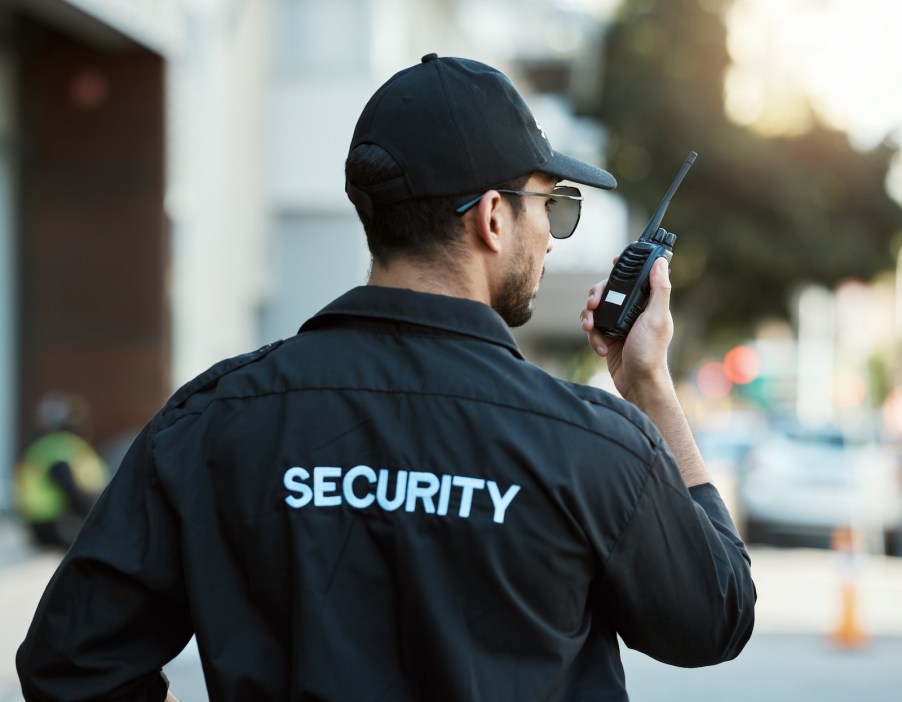
No state, as far as I know, allows plainclothes officers in unmarked cars to initiate traffic stops. Any officer conducting a traffic stop from an unmarked car must be wearing a uniform. You can check your local regulations to see whether unmarked police cars can pull you over in your state.
Staying safe when in doubt
So, how do you stay safe if you see flashing lights in your rearview mirror? First and foremost, slow down and put on your hazard lights. If you’re speeding and endangering other motorists, a misdemeanor charge for eluding the police could turn into a felony charge.
Secondly, it’s illegal to drive all the way to the next well-lit parking lot, as the fictional “Lauren” did. You must pull over immediately once the police signal you to stop. In certain states, you are only allowed to keep driving if you have reasonable suspicion that the car behind you isn’t a real police officer. Again, you’ll want to know your local laws.
If you truly suspect that the car behind you belongs to someone impersonating an officer, there is no “secret number” to call. Simply dial 911. Tell the dispatcher exactly where you are and what your car looks like. Provide your license plate number. They can confirm if you’re being pulled over by a real officer. If they confirm it, you must immediately follow their directions and stop.