Some EV fast chargers in LA pollute the air 16 times worse than local gas stations
- Average LA background air measured about 7 to 8 micrograms of PM 2.5 per cubic meter, while busy intersections reached 10 to 11.
- Local gas stations tested at around 12, yet UCLA found EV fast chargers averaging 15 and sometimes spiking up to 200.
- Researchers say the EV fast chargers themselves aren’t creating the particulate. They traced the source to cooling fans stirring up roadside dust, suggesting filters or airflow redesigns could cut the problem before it spreads.
In a city that once choked on smog and now bets big on electric cars, researchers in Los Angeles have discovered a bit of new irony. Certain EV fast chargers are much, much dirtier to stand beside than the gas pumps they were meant to replace.
LA has long been a laboratory for cleaner air
It’s where the smog crisis of the 20th century forced regulators, automakers, and engineers to innovate. But now a new twist has surfaced. A UCLA study found that EV fast charging stations (supposedly the antidote to tailpipes) are creating their own pollution hot spots.
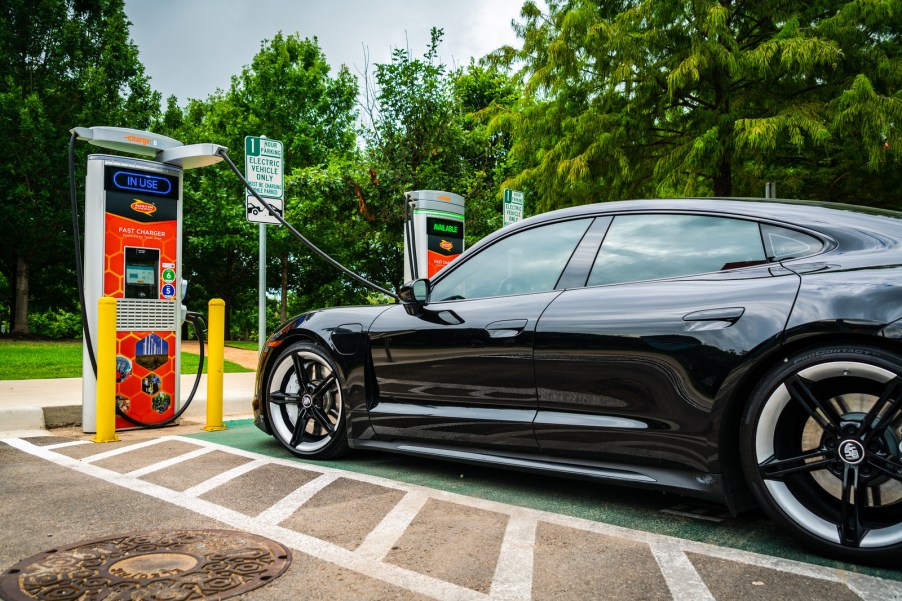
Researchers measured the air around 50 public EV fast chargers across the city
They found that the levels of fine particulate matter were not just higher than background city air, but in some cases spiked to levels worse than nearby gas stations.
At their worst, some chargers showed concentrations up to 16 times higher than those fuel pumps many locals are trying to leave behind.
The culprit isn’t EVs or the chargers themselves
Instead, it’s the cooling fans tucked inside the chargers’ power cabinets.
Each time they roar to life, they stir up microscopic particles (dust laced with brake and tire debris) that have settled in the pavement around high-traffic sites. The fans effectively blast this cocktail into the air right where drivers tend to stand.
That’s a problem because fine particulate matter, known as PM 2.5, can penetrate deep into the lungs and bloodstream
UCLA’s team explained that even short exposure at close range isn’t ideal, though the pollution drops off sharply just a few meters away. From a distance, the air quality looks no different than the city’s background haze.
Researchers said the issue should be fixable with relatively simple engineering adjustments, like better filters or redesigned airflow systems
They emphasized that EVs remain far cleaner than gasoline-powered vehicles when it comes to overall emissions. But they also warned that the fast charging network is scaling quickly, and it would be smart to address this blind spot before it grows.
For drivers, the takeaway is practical. Stay inside the car with the climate system running, or step away from the cabinet while charging.