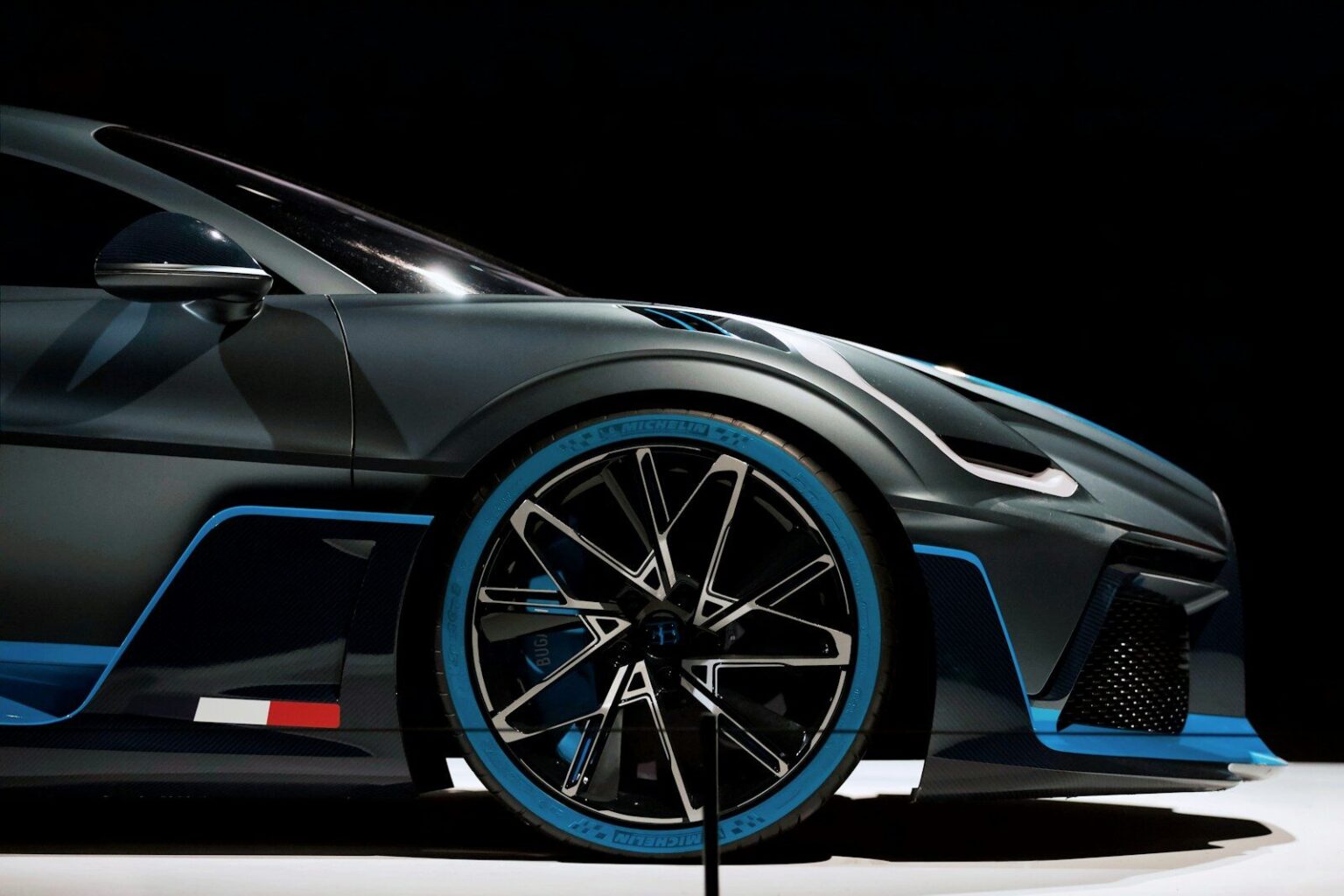
Porsche has finalized the sale of its interests in Bugatti Rimac and Rimac Group after receiving the right regulatory approvals. This sees the end of Porsche’s direct involvement with these companies and resulted in proceeds of around €1 billion, which is roughly equivalent to $1.16 billion.
Unfortunately, that money is not headed entirely toward another outrageous hypercar. Instead, Porsche has committed €250 million of the proceeds to its pension scheme, while the company says this deal will allow it to focus on the future of its own automotive business.
What Changed at Bugatti
The acquisition is led by HOF Capital, an investment firm based in New York, with additional support from BlueFive Capital and various institutional investors from both the U.S. and Europe. Ahead of the change, Porsche held a 45% stake in Bugatti Rimac, while the remaining 55% was owned by Rimac Group. Rimac Group remains the majority owner, while BlueFive now holds a 30% direct stake acquired from Porsche.
BlueFive will receive one seat on Bugatti Rimac’s board and two observer positions. Porsche also sold its separate 20.6% interest in Rimac Group.
The leadership structure is therefore also changing. Mate Rimac, the genius behind the electric Rimac brand, continues to serve as CEO of Bugatti Rimac, but will also now serve as president, succeeding Christophe Piochon, who will step down from both the presidency of Bugatti and the COO position at the company. Marko Brkljačić is expected to become chief operating officer, while Hendrik Malinowski is moving into the chief commercial officer position.
“I am really happy that the deal with Porsche and HOF Capital has been completed,” Mate Rimac said.
For Bugatti, its focus will continue to be on the absurdly fast and expensive hypercar niche, with its new leadership not expected to change its dirction. The company opened its new La Manufacture facility in Molsheim in July of 2026, and the Tourbillon was in its final testing phase when the transaction closed. Bugatti’s production allocation is reportedly sold through 2029, which is a fairly convincing way to say demand remains healthy.

Why Porsche Is Leaving Now
Volkswagen acquired the rights to the Bugatti name on May 5, 1998, during Ferdinand Piëch’s tenure. Piëch did not revive the marque as a conventional luxury brand. He aimed it at engineering excess, a strategy that produced the Veyron with its 1,001-PS, 8.0-liter quad-turbo W16 and a top speed beyond 400 km/h.
The 2021 creation of Bugatti Rimac joined that combustion-engine legacy with Rimac’s electric-vehicle experience. Porsche took a 45% position in the new company and also invested in Rimac Group, but that partnership is now over.
“Now, with the sale of our stake, we demonstrate, that we will focus Porsche on the core business,” Porsche CEO Dr. Michael Leiters said.
That core business is getting crowded enough without another hypercar company attached to it. Porsche is preparing a new-generation Macan replacement as well as EV versions of the Boxster and Cayman (urgh), and combustion-powered variants of those sports cars, too (yay).
It is also working on a three-row SUV and considering additional halo vehicles, including a GT-style model and a hypercar.
Bugatti, meanwhile, is sticking with what it does best. The Mistral and Tourbillon continue the brand’s pursuit of extreme performance, and the Tourbillon pairs a naturally aspirated V16 with hybrid assistance. Its engine can spin to 9,000 rpm, because apparently ordinary engine speeds have become insufficiently dramatic.
Porsche’s exit closes the company’s direct involvement with Bugatti and Rimac, but it does not erase what that partnership created. Bugatti still has the products, facilities, leadership, and customer demand to continue on its own terms. The Volkswagen-era chapter that began with Piëch’s 1998 acquisition is ending with a sale, not a surrender.